Every bank, insurer, pension distributor, and wealth management firm eventually reaches the same decision point: build technology in-house, patch together multiple vendors, or partner with a single technology provider who understands the full BFSI landscape. Get this decision wrong, and institutions end up with fragmented systems that don’t talk to each other, vendors who understand software but not banking, or partners who can build a product but can’t support it for the next decade. Choosing the right Financial Software Solutions partner is one of the most consequential technology decisions a financial institution makes — and it’s worth being deliberate about what to actually evaluate.
Start With Domain Depth, Not Just Technical Capability
A common mistake institutions make is evaluating technology partners purely on technical merit — cloud architecture, API design, UI polish — without weighing how deeply the partner actually understands banking and financial services as a domain. Winsoft positions itself as the driving force behind strategic innovation in the financial world, offering state-of-the-art banking and financial solutions designed to meet the unique needs of today and tomorrow. That distinction matters: financial software isn’t generic enterprise software with a banking skin on it — it needs to be built around the specific operational, regulatory, and compliance realities of BFSI from the ground up.
A partner worth choosing should be able to help institutions create a better ecosystem of products and services for customers, spanning secure and compliant ecosystems on one end and customer-centric interfaces on the other. Both matter equally — a system that’s secure but unusable fails customers, and a system that’s customer-friendly but non-compliant fails regulators.
Check Whether the Partner Covers Your Full Product Landscape
One of the clearest signs of a partner built for long-term institutional relationships, rather than one-off projects, is breadth across the actual product lines a financial institution runs. This is worth checking line by line:
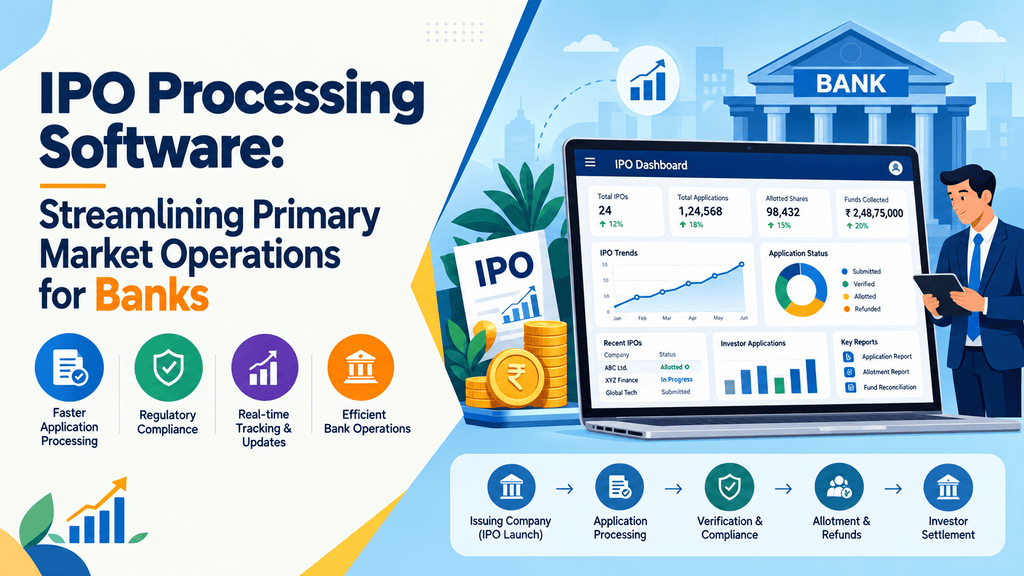
Banking and Capital Markets — Does the partner offer tools that streamline all banking processes with mission-critical enterprise software? Winsoft’s banking suite includes DeMATrix (depository participant solutions), eFDR (fixed deposit collateral management), SmartASBA (IPO and primary market application processing), SmartLocker (bank locker management), SmartLogistics, SmartSell, and SmartTax — covering the operational backbone banks actually run on, not just a single flagship product.
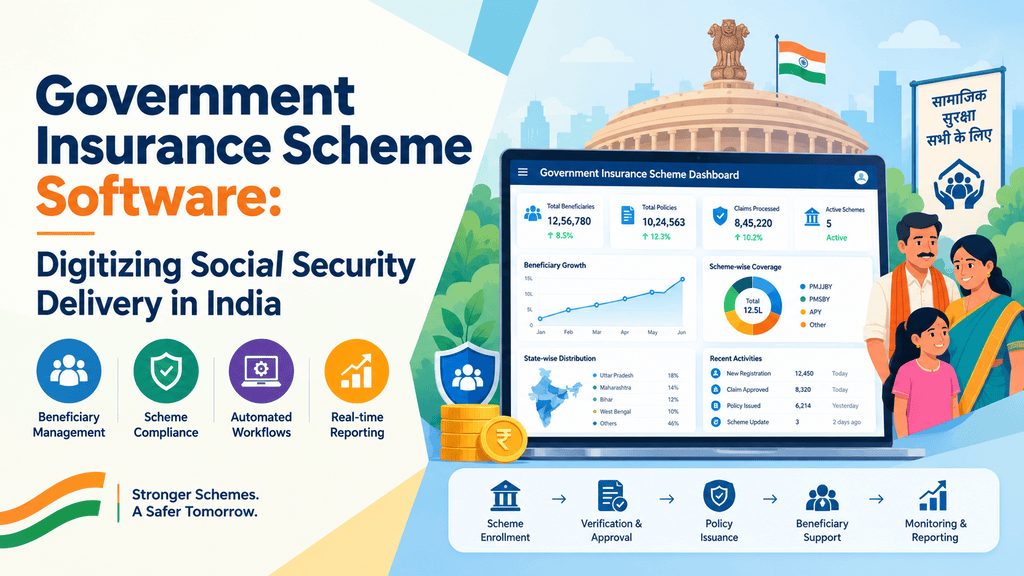
Insurance — For institutions running or supporting insurance distribution, the partner should deliver flawless process flows for life and non-life insurance distribution and comprehensive agent onboarding. This includes tools like AGENT and AGILE for agent onboarding and policy enrollment, alongside SmartInsurance for core distribution and SmartPM Scheme for government insurance scheme processing.
Pension — Institutions distributing pension products need a one-stop solution for NPS and APY distribution, covering back-office processing, subscriber-facing workflows, and touch-point management. This is where products like SmartNPS and SmartAPY come in.
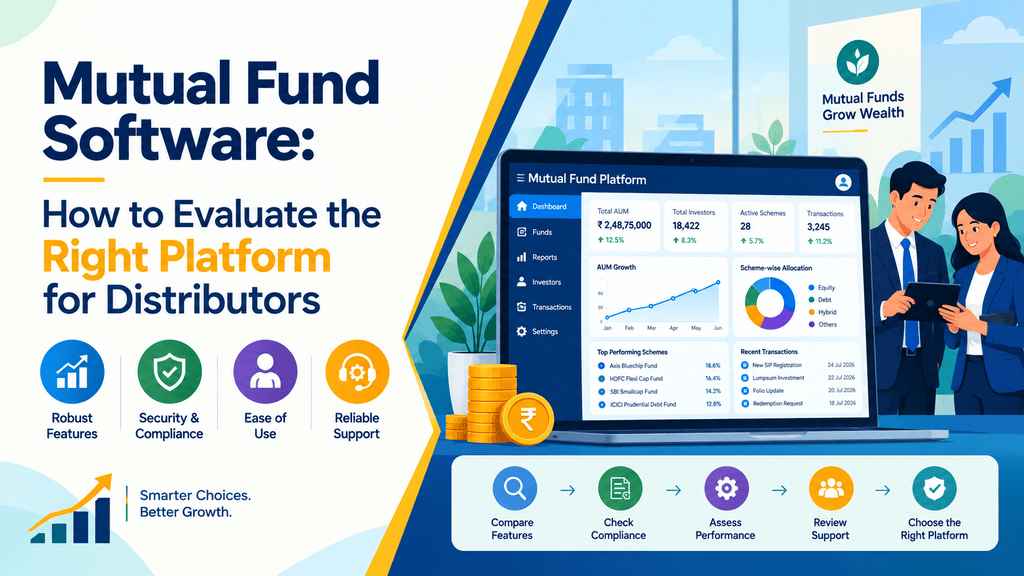
Wealth Management — For wealth and mutual fund distribution, look for an integrated wealth management system for end-to-end management of financial asset classes — covering everything from mutual fund distribution (SmartMutual) to reconciliation (SmartRecon), payout processing (SmartPayout), sovereign gold bonds (SmartSGB), and broader wealth platforms (SmartWealth).
If a potential partner only covers one or two of these areas, institutions may find themselves right back where they started — stitching together multiple vendors — just a few years down the line as their product lines expand.
Evaluate the Services Layer, Not Just the Products
Software products alone aren’t enough. The right partner should also offer the services layer that keeps those products running, evolving, and properly staffed:
- Digital Transformation Services — the ability to create exceptional customer experiences using analytics, automation of software tools, and cloud, with the right mix of industry expertise. This matters because most institutions aren’t just buying a product; they’re modernizing how they operate, and that requires strategic, not just transactional, support.
- Testing Services — ensuring robust and reliable software applications with top-quality engineering and holistic testing solutions. In BFSI, where software failures carry direct financial and regulatory consequences, this isn’t optional — it’s foundational.
- IT Staff Augmentation — talented and technical resources that can fulfill short-term and long-term IT staffing needs. Implementation and scaling phases often require additional technical capacity that doesn’t make sense to hire permanently, and a partner who can flex resourcing accordingly adds real operational value.
- Turn-Key Projects & Product Re-Engineering — backed by 25+ years of expertise in managing a customer’s application life-cycle. This signals a partner capable of taking ownership of a project end-to-end, rather than delivering a component and stepping away.
Institutions evaluating partners should ask directly: can this partner support us not just at go-live, but through the years of maintenance, staffing fluctuations, and re-engineering that inevitably follow?
Look at Track Record and Longevity
Technology in BFSI isn’t a short-term relationship — core systems often run for a decade or more, and switching partners mid-stream is expensive and risky. This makes a partner’s track record genuinely important to weigh. Winsoft was founded in 1993 and has earned a unique reputation for its solutions and delivery excellence serving all the top blue-chip organizations in the BFSI industry. Longevity in a space as regulation-heavy and technically demanding as financial services is itself a signal — a partner who has operated through multiple regulatory cycles, technology shifts, and market conditions has proven staying power that a newer vendor hasn’t yet had the chance to demonstrate.
It’s also worth looking at who else trusts the partner. A provider serving innovative and inspiring companies across the globe, with the privilege of a strong client base in banking and financial solutions, gives institutions a reasonable degree of confidence that the partner can operate at the scale and compliance level their own institution requires.
Practical Questions to Ask When Evaluating a Partner
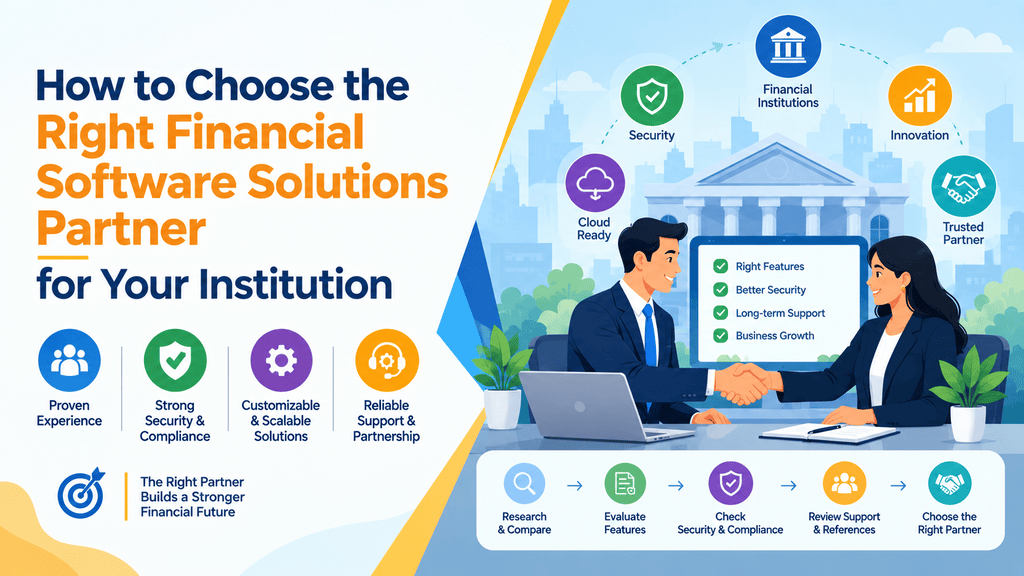
Bringing this together into a practical checklist, institutions should be asking:
- Does the partner understand our specific product line — banking, insurance, pension, or wealth management — deeply, or are they generalists?
- Can they support us across multiple product areas as our institution grows, rather than requiring a new vendor for each new business line?
- Do they offer services beyond the software itself — digital transformation, testing, staff augmentation, re-engineering — that we’ll need over the system’s lifecycle?
- How long have they operated in BFSI specifically, and what does their client base look like?
- Can they balance compliance and security with genuinely usable, customer-centric interfaces, rather than sacrificing one for the other?
Why This Decision Extends Beyond a Single Product Purchase
Choosing a financial software solutions partner is rarely just about one product. Institutions that start with, say, a Banking Technology Solutions need often find themselves later expanding into wealth management, pension distribution, or insurance technology as their business grows. A partner capable of supporting that full journey — rather than one that only solves today’s immediate problem — saves institutions from repeating this entire evaluation process every few years.
Conclusion
The right financial software solutions partner isn’t necessarily the one with the flashiest product demo — it’s the one with genuine BFSI domain depth, coverage across the product lines an institution actually runs (banking, insurance, pension, and wealth management), a services layer that supports the full technology lifecycle, and a track record proven over years, not months. Institutions that evaluate partners against this fuller picture — rather than a single point solution — are far better positioned for a technology relationship that scales with them, instead of becoming another system they’ll need to replace in a few years.