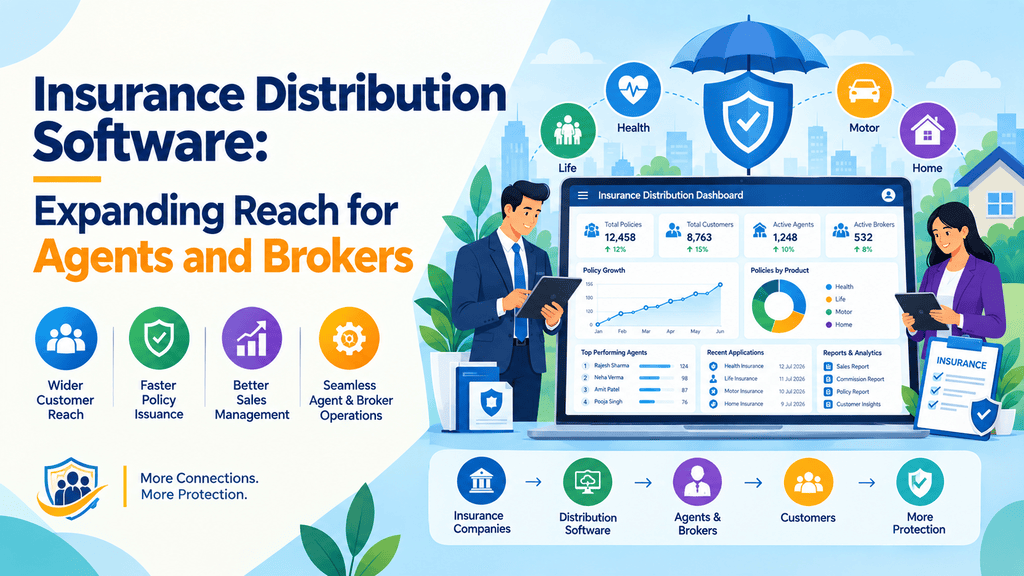
Insurance distribution today rarely runs through a single process. Government-backed schemes, private life and non-life products, sales force onboarding, and policy renewals all need to be managed simultaneously, often across hundreds of branches and thousands of relationship managers. Behind this everyday complexity sits a layer of software most customers never see, but one that determines how smoothly the entire distribution chain actually works.
This blog looks at what insurance distribution software typically covers, based on how these platforms are actually built and used across banks and financial distributors.
Why Insurance Distribution Needs Dedicated Software
Distributing insurance, particularly at scale, involves several distinct processes running in parallel:
- Onboarding customers for government-backed insurance schemes
- Managing life and non-life policy distribution through back-office processing
- Training relationship managers before they can sell insurance products
- Enrolling new policies and automating recurring premium payments
Handling each of these manually, across a large branch network, creates significant room for delays, inconsistent processes, and compliance gaps. Purpose-built software exists specifically to bring structure to this complexity.
Supporting Government-Backed Insurance Schemes
A meaningful part of insurance distribution in India today involves government social security schemes, such as those offering affordable life and accident insurance to underserved populations. Software built for this purpose typically includes:
- A browser-based, mobile-responsive interface
- A Back Office for internal processing
- A Front Office for customer-facing onboarding
- Online APIs to support digital enrolment and renewal
This kind of setup allows banks to onboard and renew customers under these schemes efficiently, without relying on manual, paper-based registration at the branch level.
Why Does This Matter for Financial Inclusion?
A fair question here is why banks would need dedicated software just for government scheme distribution, rather than folding it into general insurance processes.
The answer lies in scale and reach. These schemes are often aimed at large, geographically spread populations, many of whom may have limited prior exposure to formal insurance products. Dedicated digital onboarding and renewal processes make it possible to serve this scale efficiently, while keeping the process simple enough for both customers and branch staff to use confidently.
Life and Non-Life Insurance Distribution
Beyond government schemes, banks and distributors also handle a broader range of life and non-life insurance products. Insurance Distribution Software built for this purpose typically provides:
- A seamless Back Office for managing overall processing
- A user-friendly Front Office for customer and advisor interactions
- An exhaustive reporting feature to track distribution performance
This combination allows distributors to manage day-to-day policy distribution activity while maintaining visibility into how the business is performing across products and channels.
Training the Sales Force
Insurance distribution isn’t just about the customer-facing process, it also depends heavily on properly trained relationship managers. Given regulatory expectations around who can sell insurance products, software designed for this purpose focuses specifically on:
- Digitally onboarding relationship managers into the training process
- Tracking training completion and status
- Reducing the administrative burden of managing this manually across branches
For banks with large distribution networks, digitising this process significantly reduces the coordination effort required to keep sales staff trained and ready before they begin selling.
Policy Enrolment and Premium Automation
The final piece of the distribution chain involves the ongoing lifecycle of a policy once it’s sold. This includes:
- Entering new policies for insured customers
- Automating yearly premium payment processing
Automating this stage reduces the manual follow-up typically required to ensure premiums are paid on time, helping distributors maintain consistent policy servicing without constant manual tracking.
A Question Worth Asking: How Does This Fit Into a Bank’s Broader Systems?
A practical question for any bank evaluating this kind of software is how it fits alongside everything else already running internally. Since insurance distribution activity, onboarding, renewals, and premium processing ultimately touches customer accounts and payment flows, it’s worth considering how closely a platform can work with a bank’s existing Banking Technology Solutions, rather than functioning as a completely disconnected system. This is a factor banks may want to evaluate directly with any vendor, since the level of integration can vary.
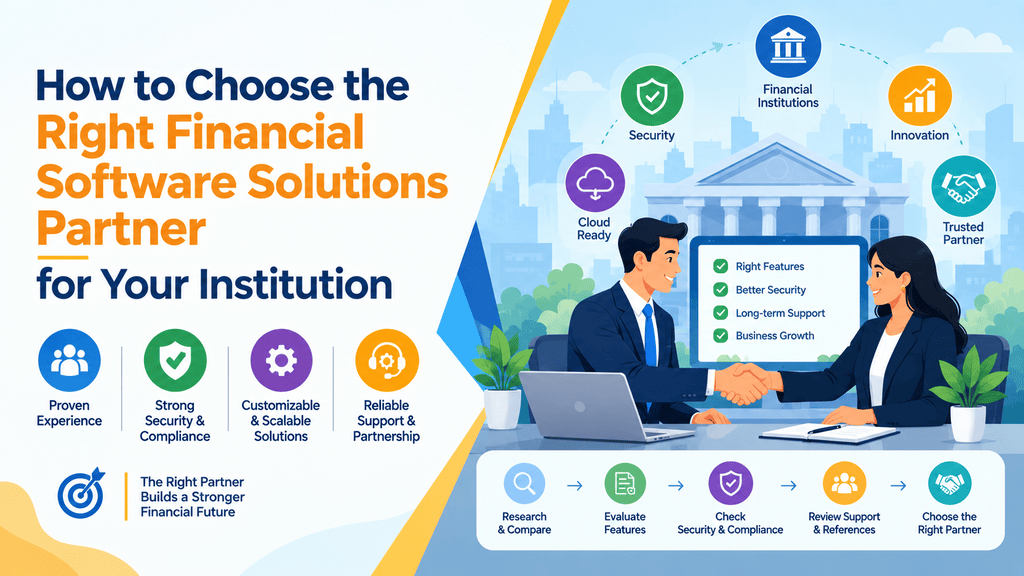
What Should Banks and Distributors Look for in a Platform?
When evaluating options across these different functions, insurance schemes, general life and non-life distribution, RM training, and policy servicing, a few practical questions help guide the decision:
- Does it support both government scheme distribution and broader life/non-life products?
- How well does it handle relationship manager onboarding and training tracking?
- Does it automate recurring processes like premium payments?
- What level of reporting visibility does it offer across the distribution chain?
- How well can it integrate with a bank’s existing customer and account systems?
Working through these questions helps ensure the chosen platform genuinely covers the full scope of a distributor’s insurance operations, rather than addressing only one part of it.
Conclusion
Insurance distribution involves considerably more than a single sales transaction. From onboarding customers into government-backed schemes to managing life and non-life policy distribution, training relationship managers, and automating premium payments, each stage benefits from dedicated digital processes. For banks and distributors managing this at scale, software built specifically around these functions helps keep operations consistent and considerably easier to manage across large branch networks.
FAQs
Q1. What does insurance distribution software typically cover?
It typically covers government scheme onboarding and renewal, life and non-life policy distribution processing, relationship manager training, and policy enrolment with premium automation.
Q2. Why is government scheme distribution handled separately from general insurance products?
These schemes are often aimed at large, underserved populations, so dedicated digital onboarding and renewal processes help distributors manage this scale efficiently.
Q3. How does this software help with relationship manager training?
It supports digital onboarding into the training process, helping banks track training completion and status before staff begin selling insurance products.
Q4. Does this kind of software automate premium payments?
Yes, it typically supports automation of yearly premium payment processing as part of the broader policy servicing process.
Q5. Does insurance distribution software need to integrate with a bank’s other systems?
Since it touches customer accounts and payment processes, integration with a bank’s existing systems is an important factor to evaluate when choosing a platform.