Insurance distribution in India is growing fast, and not just in the metros. As banks, brokers, and intermediaries push deeper into semi-urban and rural markets, the volume of policies, insurer tie-ups, and compliance requirements they handle is growing right along with it. Somewhere in that growth, manual processes start breaking down.
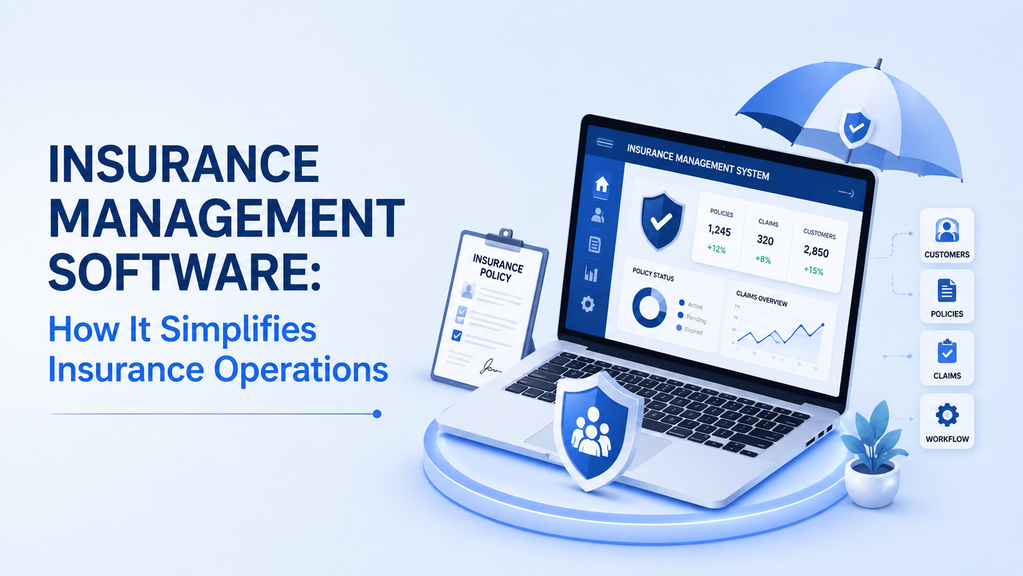
This is exactly the gap Insurance Management Software is built to close. It gives insurance distributors and brokers one connected platform to manage advisors, operations, and customers, instead of juggling spreadsheets, phone calls, and disconnected insurer portals.
This blog looks at why manual processes fall short, what a proper insurance management platform actually does, and what distributors should check before adopting one.
Why Manual Insurance Distribution Operations Fall Short
Distributors and brokers who still rely on manual or semi-digital processes typically run into the same set of problems:
- Proposal forms, premium collection, and renewal tracking scattered across registers or spreadsheets.
- No single view of policies sold across multiple insurers.
- Income and commission calculations done manually, with base, bonus, top-up, and clawback components easy to miscalculate.
- Customers are restricted to branch visits or phone calls to buy or renew a policy.
- Delayed or incomplete reporting when management or regulators ask for numbers.
None of these problems are unusual. They are simply what happens when a growing distribution business tries to run on tools that were never designed for the scale or complexity of multi-insurer, multi-channel insurance sales.
What Insurance Management Software Actually Does
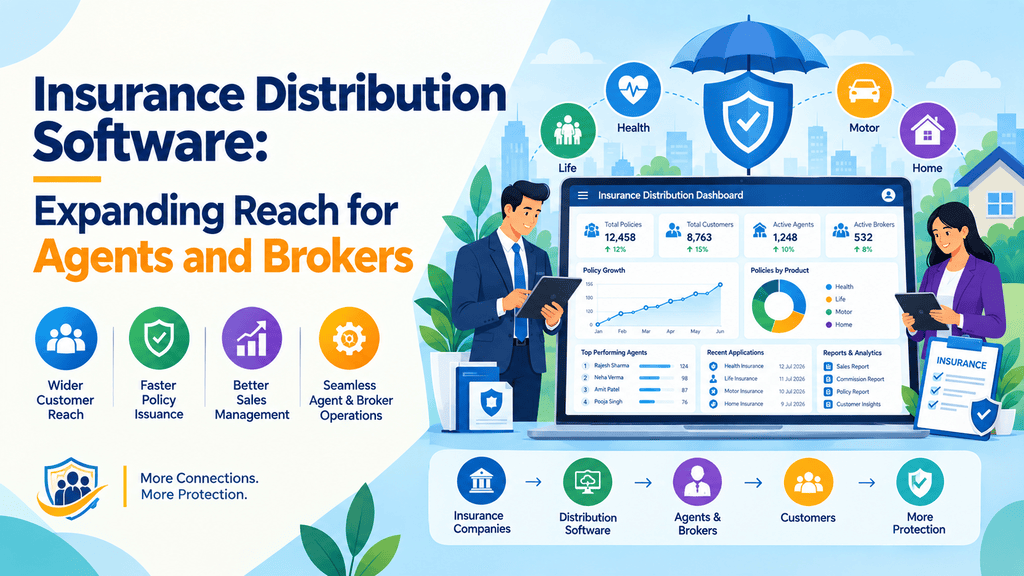
At its core, a proper platform connects three groups that insurance distribution depends on: the people selling policies, the operations team running the business, and the customers buying and renewing cover.
For Advisors and Relationship Managers
Advisors get a workspace to fill proposal forms, collect premiums, track upcoming renewals, and manage auto-renewals and cancellations, with SMS and email notifications keeping both the advisor and the customer in the loop. This alone removes a large share of the manual follow-up that eats into an advisor’s selling time.
For the Operations Team
This is usually where the heaviest lifting happens. Operations teams get:
- Master management to support products from multiple insurance companies across categories.
- User management and access control, often integrated with existing identity systems.
- Automated income calculation and reconciliation, covering base, bonus, top-up, clawback, and loyalty components.
- An open, API-based framework to connect with different insurers for quotation, proposal, issuance, renewal, and servicing.
- Support for digital payment modes, including core banking integration, payment gateways, and cards.
Because the income structure in insurance distribution is rarely a flat number, getting this calculation right, and being able to reconcile it against what insurers actually pay, matters more than most people outside operations realise.
For Customers
Policyholders increasingly expect to manage their own insurance. Insurance Management Software typically gives them a self-service portal to purchase or renew policies through net or mobile banking, supported by eKYC integration and payment gateway access, with a straightforward interface that does not require a branch visit for routine transactions.
For Reporting and Compliance
A dynamic reporting layer sits on top of all this, covering enrolment, issuance, policy enquiry, policy expiry, and renewal-due reports, along with a management dashboard for a real-time view of the business. This reporting also supports the audit and regulatory compliance checks that insurance distribution businesses are regularly subject to.
Capabilities Worth Looking For Beyond the Core Platform
A few additional capabilities are worth checking for, especially for banks and larger distributors. For institutions already investing in broader Digital Transformation Services, insurance operations are often one of several areas being modernised alongside core banking and payments, so a platform that fits naturally into that wider shift, rather than sitting apart from it, tends to hold up better over time. This becomes particularly relevant for banks running bancassurance operations, where insurance distribution needs to work alongside existing Banking Technology Solutions rather than as a disconnected add-on.
Digital certification tracking for sales teams, particularly relevant where relationship managers need periodic IRDA certification. A good system automates scheduling training, tracking exam status, and generating the required certification documents, right through to exit formalities when someone leaves the sales team.
Key Benefits at a Glance
- Accurate income tracking – base, bonus, top-up, clawback, and loyalty components calculated and reconciled automatically.
- Faster policy issuance and renewals – across web, mobile, branch, and advisor channels.
- Reduced dependency on insurers for data – distributors hold their own consolidated view of policies and customers.
- Audit-ready reporting – enrolment, issuance, expiry, and renewal-due reports generated without manual compilation.
- Better customer experience – self-service options backed by eKYC and digital payments
What to Look for Before Choosing a Platform
Before adopting a system, distributors and brokers should evaluate it against a few practical points:
- Multi-insurer, multi-product support, so the platform can accommodate existing and future tie-ups without rework.
- Accurate income calculation logic, capable of handling base, bonus, top-up, clawback, and loyalty components correctly.
- Built-in compliance and certification tracking, rather than compliance treated as a separate, manual process.
- Multi-channel customer access, including web, mobile, and branch, with digital payment support.
- Open API architecture, allowing integration with insurers as well as other internal systems used by the distribution business.
Getting clarity on these points before implementation helps avoid disruption later and ensures the platform genuinely fits how the distribution business operates.
Conclusion
Insurance distribution has moved well past the point where spreadsheets and manual follow-ups can keep pace. Between multiple insurer tie-ups, layered income structures, growing compliance requirements, and customers who want to transact on their own terms, distributors and brokers need a system built specifically for how their business works. Insurance Management Software brings advisors, operations, and customers onto one connected platform, and for distribution businesses aiming to grow without a proportional rise in manual effort, that shift is becoming less optional every year.
Frequently Asked Questions
1. Who is Insurance Management Software built for?
It is built primarily for insurance distributors, brokers, and banks running bancassurance operations, covering their advisors, operations teams, and end customers, rather than for insurance companies managing underwriting.
2. Can it handle policies from more than one insurance company?
Yes. These platforms typically use an open, API-based framework specifically so distributors can manage tie-ups with multiple insurers, across life, health, and general insurance, from a single system.
3. How does it help with income and commission accuracy?
It automates calculation of components like base, bonus, top-up, clawback, and loyalty payouts, and reconciles them, reducing the manual errors that are common when this is tracked by hand across a large policy book.
4. Can customers renew or buy policies without visiting a branch?
Yes. Most platforms include a customer-facing portal for purchasing or renewing policies through web or mobile channels, usually with eKYC and digital payment support built in.
5. Is this type of software only useful for large distribution businesses?
No. Larger businesses benefit from handling higher policy volumes and bigger sales teams, but smaller distributors gain just as much from reduced manual effort in income calculation, renewal tracking, and reporting.