Ask any banking or financial services leader what keeps them up at night, and “staying relevant” will likely top the list. Customer expectations have shifted dramatically, regulatory requirements keep evolving, and legacy systems that once worked fine are now struggling to keep pace. The BFSI sector, perhaps more than any other, finds itself at a crossroads where digital adoption isn’t optional anymore — it’s foundational to survival.
This blog unpacks why that shift matters, what it actually involves, and how businesses across banking, insurance, and financial services can approach it practically.
The Pressure Points Driving Change
Before looking at solutions, it’s worth understanding what’s actually pushing BFSI businesses toward digital adoption in the first place.
- Rising customer expectations. Today’s customers, whether retail investors or corporate clients, expect instant access, real-time updates, and self-service options. A process that takes days through manual channels feels unacceptable when everything else in their life happens at the tap of a screen.
- Regulatory complexity. Compliance requirements in BFSI change frequently and carry serious consequences for non-compliance. Manual tracking simply cannot keep up with the pace and precision regulators now expect.
- Operational inefficiency. Legacy systems, often built on outdated architecture, create bottlenecks. Data sits in silos, reconciliation takes longer than it should, and scaling operations becomes a resource-heavy exercise rather than a smooth process.
- Competitive pressure. As more players, including newer, digitally native entrants, raise the bar on service delivery, traditional institutions face growing pressure to modernise or risk losing relevance.
What Do Digital Transformation Services Actually Cover?
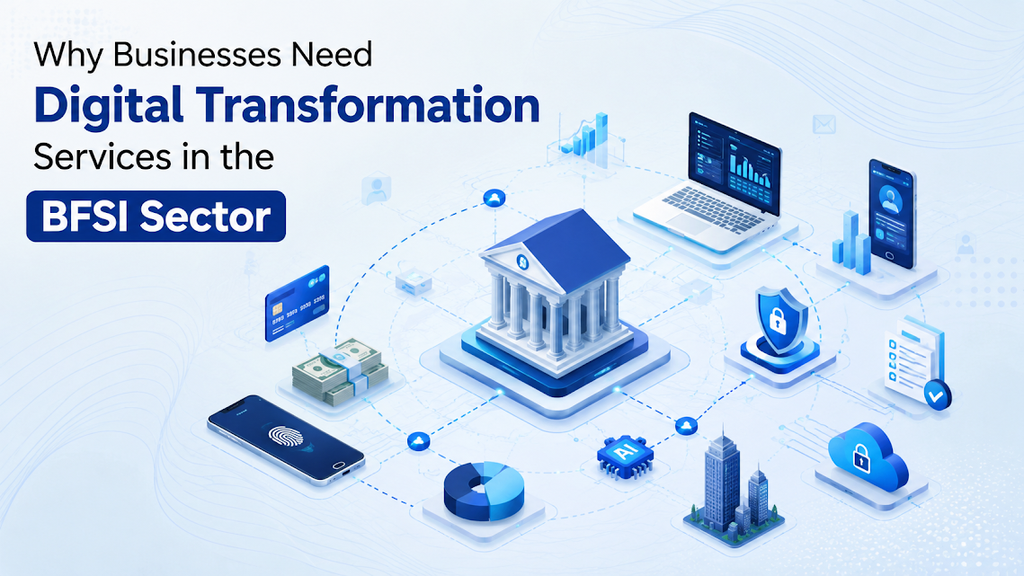
The term gets used loosely, so it helps to define it clearly. Digital Transformation Services typically involve reimagining how a business operates, using technology to streamline processes, improve customer experience, and enable data-driven decision-making, rather than simply digitising existing paper-based workflows.
For BFSI specifically, this can include:
- Modernising legacy core systems
- Automating manual, repetitive back-office processes
- Building customer-facing digital platforms and self-service portals
- Integrating data across departments for unified visibility
- Strengthening cybersecurity and compliance infrastructure
- Enabling cloud adoption for scalability and cost efficiency
The scope is broad, which is exactly why a structured, phased approach tends to work better than attempting everything at once.
Is Digital Transformation Really Necessary, or Just a Trend?
This is a fair question, and one many decision-makers genuinely wrestle with. Isn’t this just another buzzword that will fade?
The honest answer is that while the terminology may evolve, the underlying shift is structural, not cyclical. Customer behaviour has permanently changed. Regulatory bodies increasingly expect digital-first compliance mechanisms. And operational costs of maintaining outdated systems only grow over time, both in direct expense and in opportunity cost from slower processes.
Businesses that treat this as optional often find themselves playing catch-up later, at a higher cost and with greater disruption than a planned, gradual transformation would have required.
Key Benefits for BFSI Businesses
1. Improved Customer Experience
Digital platforms allow customers to complete transactions, track applications, and access information without depending on branch visits or lengthy call centre interactions. This convenience directly influences customer satisfaction and retention.
2. Faster, More Accurate Operations
Automation reduces the time spent on repetitive manual tasks, from document verification to reconciliation, while also lowering the risk of human error in high-stakes financial processes.
3. Stronger Compliance Posture
Automated compliance tracking and audit trails make it considerably easier for institutions to stay aligned with regulatory requirements, reducing both risk and administrative burden.
4. Better Data-Driven Decisions
When data flows freely across departments instead of sitting in isolated systems, leadership gains clearer visibility into performance, risk, and opportunity, enabling faster, more informed decisions.
5. Scalability Without Proportional Cost
Digital infrastructure, particularly cloud-based systems, allows businesses to scale operations up or down based on demand without the heavy fixed costs associated with traditional infrastructure expansion.
How Does This Play Out in Specific BFSI Functions?
Banking Operations
From account opening to loan processing, digitisation significantly reduces turnaround times while improving accuracy and customer transparency throughout each stage.
Insurance Distribution
Digital platforms streamline policy issuance, claims processing, and commission management, particularly valuable given how many stakeholders are typically involved in insurance distribution chains.
Capital Markets and Public Offerings
Processes like IPO applications, historically paperwork-heavy and time-sensitive, benefit enormously from automation. IPO Management Software, for instance, allows institutions to handle high volumes of applications, allotments, and compliance checks with far greater speed and accuracy than manual methods ever could.
Wealth and Asset Management
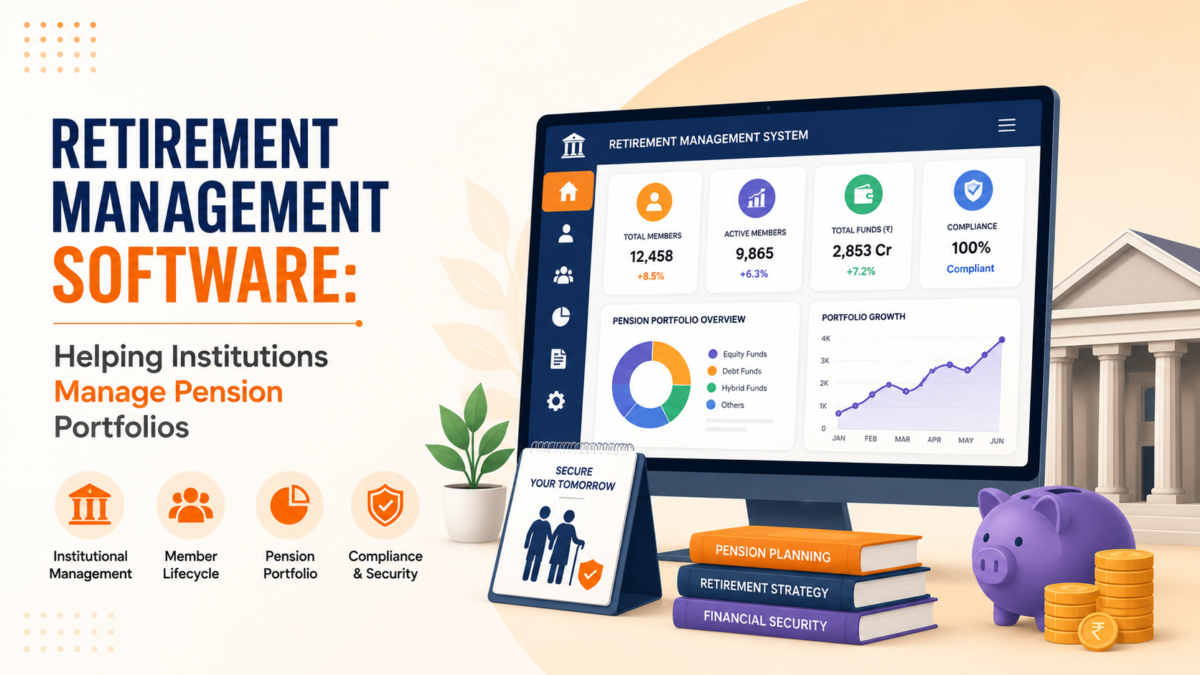
Portfolio tracking, reporting, and client communication all become more efficient when built on integrated digital platforms rather than fragmented manual processes.
The India Context: Why It Matters Here Specifically
India’s BFSI sector operates under a unique combination of factors: a rapidly growing digital-first customer base, an evolving regulatory environment, and increasing financial inclusion initiatives extending services to previously underserved populations. This creates both significant opportunity and real complexity.
Businesses looking for BFSI Solutions in India need platforms and services that understand these local nuances, from regulatory frameworks specific to Indian financial markets to the operational realities of serving a diverse, geographically spread customer base across urban and semi-urban regions. Generic global solutions don’t always translate well without this contextual understanding.
Common Challenges in the Transformation Journey
Even well-planned digital transformation efforts run into obstacles:
- Legacy system integration can be technically complex and time-consuming.
- Change management across large employee bases requires sustained effort.
- Data migration demands careful planning to avoid errors or loss.
- Budget constraints can limit the pace or scope of transformation initiatives.
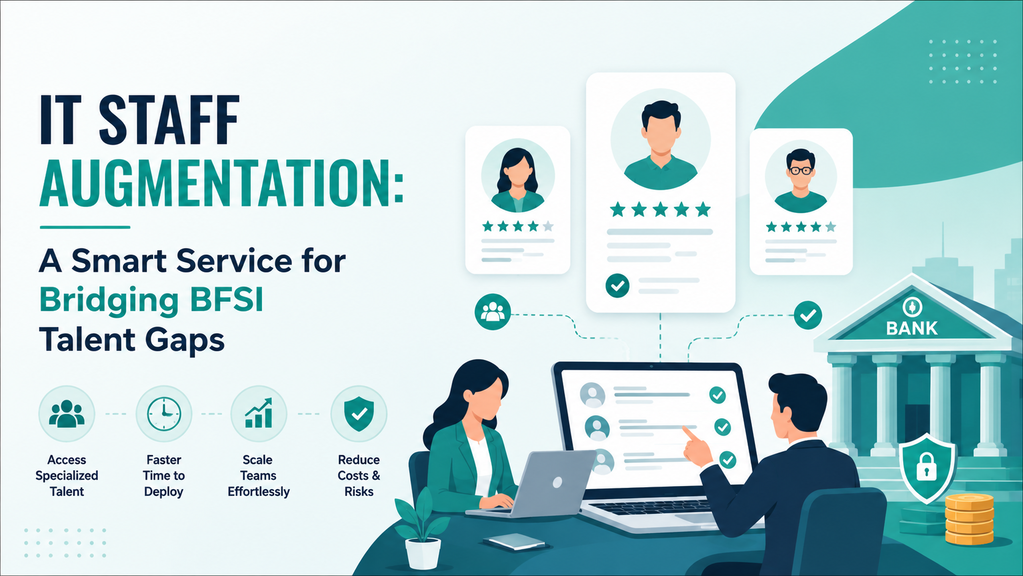
- Skill gaps internally may require external expertise to bridge them effectively.
Recognising these challenges early, and planning around them, tends to make the difference between a transformation effort that stalls and one that delivers sustained results.
A Practical Approach: Where Should Businesses Start?
Rather than attempting a complete overhaul immediately, many successful transformations follow a phased approach:
- Start with a clear assessment of current pain points and priorities.
- Identify quick wins that demonstrate value early, building internal buy-in.
- Gradually modernise core systems, rather than a single disruptive migration.
- Continuously gather feedback from both customers and internal teams.
- Build in flexibility to adapt as technology and regulations evolve.
This measured approach reduces risk while still moving the organisation meaningfully forward.
Conclusion
Digital transformation in BFSI isn’t about chasing the latest technology trend, it’s about building the operational foundation needed to meet rising customer expectations, navigate regulatory complexity, and compete effectively in an increasingly digital-first market. Businesses that approach this thoughtfully, with clear priorities and realistic timelines, position themselves not just to keep pace with change, but to genuinely benefit from it over the long term.
FAQs
1. Why is digital transformation particularly important for BFSI businesses?
The sector faces unique pressures from regulatory complexity, rising customer expectations, and competitive dynamics, making digital adoption essential rather than optional for long-term relevance.
2. Does digital transformation mean replacing all legacy systems at once?
Not necessarily. Most successful transformations follow a phased approach, gradually modernising systems rather than attempting a complete overhaul simultaneously.
3. How does digital transformation help with regulatory compliance?
Automated tracking, audit trails, and standardised processes make it easier for institutions to stay aligned with evolving regulatory requirements while reducing manual compliance burden.
4. What role does automation play in areas like IPO processing?
Automation significantly speeds up high-volume, time-sensitive processes like IPO applications and allotments, while reducing the risk of manual errors during peak periods.
5. What should BFSI businesses look for in a transformation partner?
Understanding of local regulatory context, proven experience in financial services, scalable technology solutions, and a phased implementation approach are all important considerations.