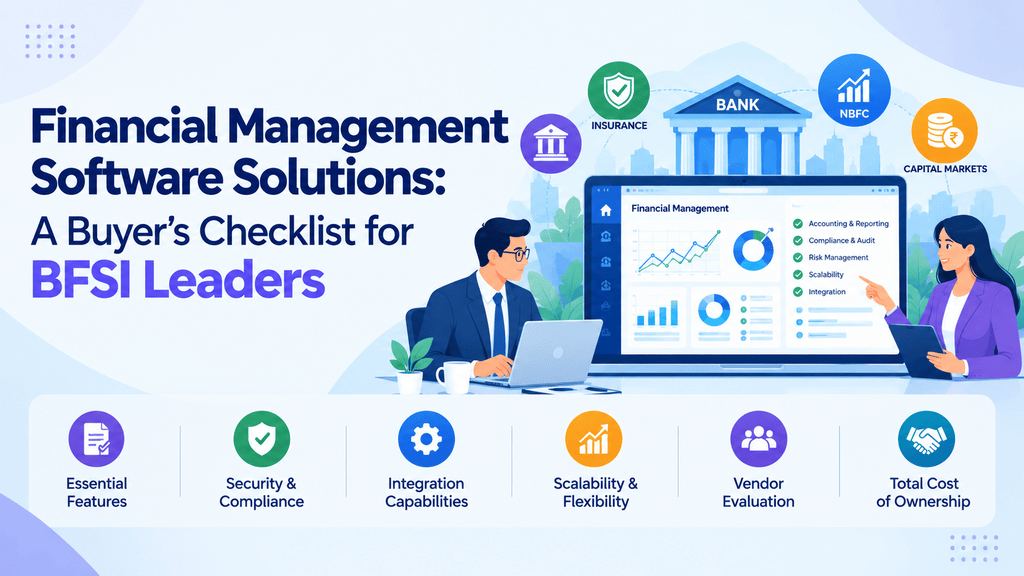
Buying technology for a bank, insurer, pension distributor, or wealth management firm is not like buying software for an ordinary business. The systems you choose will handle customer money, meet regulatory scrutiny, and stay in place for years. A weak choice does not just cost you a license fee. It costs you months of rework, frustrated staff, and customers who notice when things go wrong.
That is why leaders need a clear way to judge their options. This checklist is designed for exactly that purpose. It explains what to examine when evaluating financial management software solutions so that your decision rests on facts rather than on a polished demo.
Why a Checklist Helps
BFSI technology decisions involve many voices. Operations wants efficiency, compliance wants control, sales wants better tools, and IT wants systems that integrate cleanly. Without a shared framework, the loudest voice often wins.
A checklist puts every priority on the table. It also makes vendor comparisons fair, because every provider is measured against the same questions. Use the sections below as a working document, and score each vendor as you go.
1. Does the Vendor Understand Your Industry?
Start with domain knowledge. Financial software is not generic enterprise software with a banking label. The vendor should understand how banks, insurers, pension distributors, and wealth firms actually operate.
Winsoft describes itself as a trusted end-to-end technology solution provider for banks and financial institutions, built to meet the needs of today and tomorrow. It provides specialized software products and services for the Banking, Financial Services, and Insurance industry, and it was founded in 1993. Longevity of this kind is worth weighing. A vendor that has worked with blue-chip BFSI organizations over many years has seen regulatory changes, technology shifts, and market cycles that a newer provider has not.
Ask the vendor: How long have you worked specifically in BFSI, and which types of institutions do you serve?
2. Does It Cover Your Product Lines?
Many institutions run more than one line of business. A bank may also distribute insurance, pension products, or mutual funds. If a vendor covers only one of these, you may end up stitching together several providers.
Check coverage across the four main areas:
- Banking and capital markets: Winsoft’s suite includes DeMATrix, eFDR, SmartASBA, SmartLocker, SmartLogistics, SmartSell, and SmartTax, built to streamline banking processes.
- Insurance: AGENT, AGILE, SmartInsurance, and SmartPM Scheme support life and non-life distribution and agent onboarding.
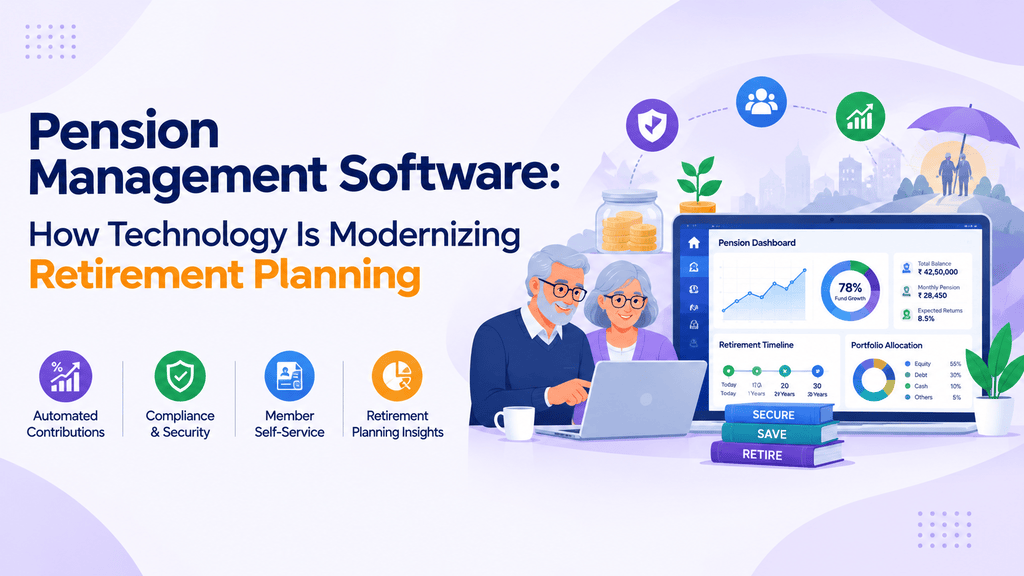
- Pension: SmartNPS and SmartAPY offer a one-stop solution for NPS and APY distribution, with back-office processing, subscriber-facing workflows, and touch-point management.
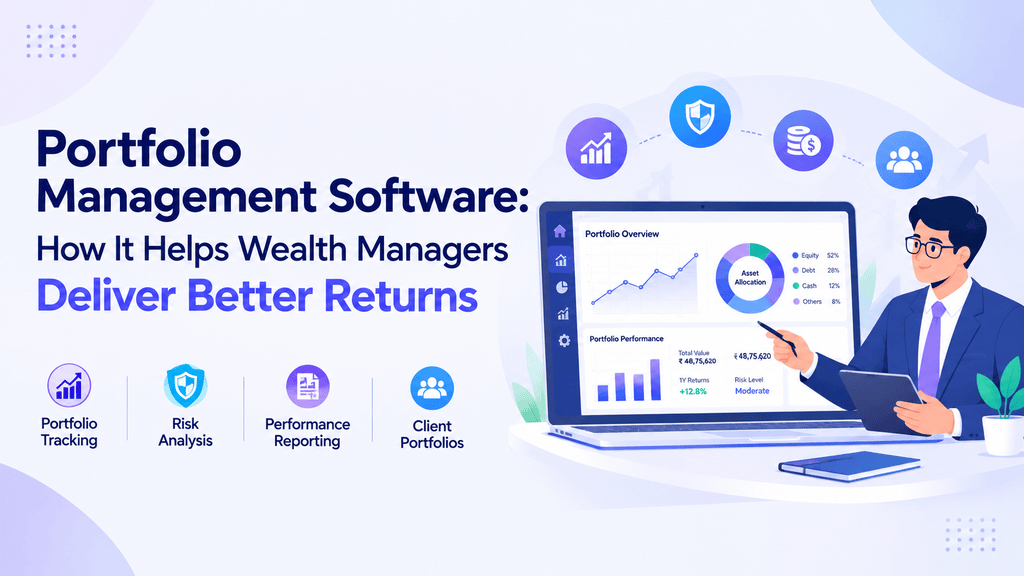
- Wealth management: SmartMutual, SmartPayout, SmartRecon, SmartSGB, and SmartWealth form an integrated system for the end-to-end management of financial asset classes.
Ask the vendor: If we expand into another product line, can you support us, or will we need another provider?
3. Is It Built for Security and Compliance?
In BFSI, a system that works but cannot be trusted is no use at all. Security and regulatory compliance must be part of the design from the start.
Winsoft’s stated approach covers secure and compliant ecosystems on one side and customer-centric interfaces on the other. Both matter equally. A secure system that customers find hard to use will frustrate them, while an easy-to-use system that falls short on compliance puts the institution at risk.
Ask the vendor: How does the product support regulatory requirements, and how are changes in regulation handled over time?
4. Does It Improve the Customer Experience?
Financial institutions compete on service as much as on products. Customers now expect fast onboarding, simple digital journeys, and clear information. Software that improves the back office but leaves the customer experience unchanged only solves half the problem.
Look for platforms that connect back-office processing with customer-facing workflows. In pension distribution, for example, Winsoft’s solution is described as combining back-office processing with subscriber-facing workflows and touch-point management. That pairing is the kind of connection you want to see across any product you evaluate.
Ask the vendor: Show us the customer journey from start to finish, not just the administrator’s screen.
5. How Well Does It Integrate With What You Already Use?
Few institutions can replace everything at once. New software has to work alongside existing systems, whether that is core banking, payment channels, or other platforms. Poor integration creates manual work, which defeats the purpose of buying software in the first place.
Ask the vendor: Which of our existing systems will you connect to, and who handles the integration work? Request specific examples rather than general assurances.
6. Can the Vendor Deliver Beyond the Software?
A product is only as good as the support around it. Implementation, testing, and ongoing change all need skilled people. Review the services a vendor offers alongside its products:
- Digital Transformation: creating exceptional customer experiences using analytics, automation of software tools, and cloud, with the right mix of industry expertise
- Testing Services: ensuring robust and reliable software applications through quality engineering and holistic testing
- Staff Augmentation: talented, technical resources to fulfill short-term and long-term IT staffing needs
- Turn-key Projects and Product Re-Engineering: backed by 25+ years of expertise in managing a customer’s application life-cycle
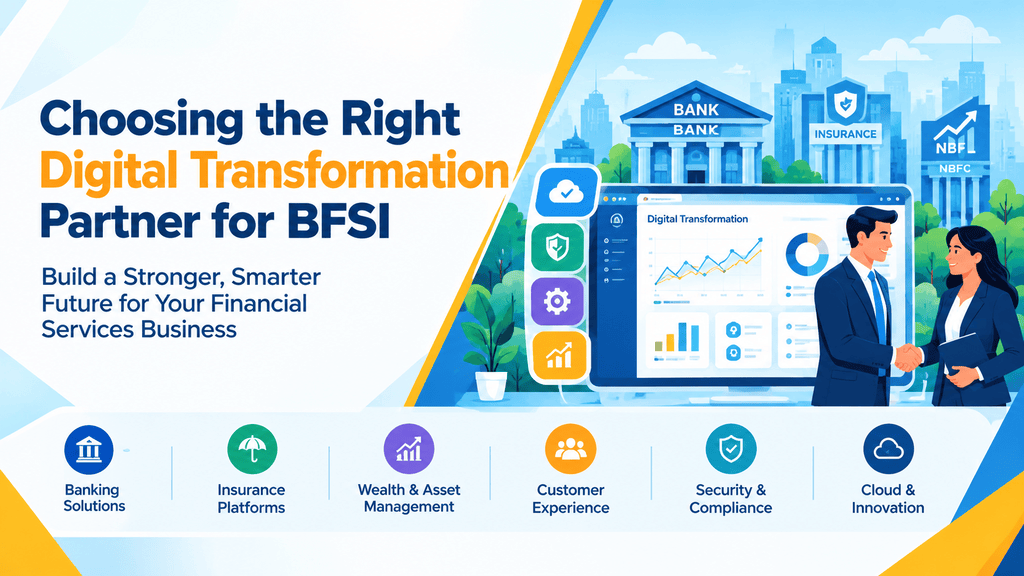
For institutions planning broader modernization, strong Digital Transformation Services support can make the difference between a successful rollout and a stalled one. Implementation phases also tend to need extra technical capacity, so a partner offering IT Staff Augmentation can help you add skilled people without long-term hiring.
Ask the vendor: What support do you provide after go-live, and what happens when our needs change?
7. Will It Scale With Your Business?
Think about where your institution will be in five years. More customers, more products, and more channels will all place new demands on your systems. A solution that fits today but cannot grow will force another costly replacement.
Wealth management gives a good example of what scalable coverage looks like. Winsoft’s wealth suite is described as an integrated system for the end-to-end management of financial asset classes. Firms exploring a Wealth Management Platform should ask how easily new asset classes and services can be added to it.
Ask the vendor: What does growth look like on your platform, and what would it take to add new products or volumes?
8. What Does Ownership Really Cost?
The price on the proposal is only the beginning. Include implementation, training, integration, support, and future upgrades when you compare costs. A cheaper product that needs constant manual workarounds can end up costing more than a stronger one.
Ask the vendor: Provide a full breakdown of costs over several years, not only the initial license.
9. What Do Existing Clients Say?
Reference checks reveal what demos cannot. Speak with institutions similar to yours. Ask how the implementation went, how the vendor handled problems, and whether the product delivered what was promised.
Ask the vendor: Can we speak with clients in our segment who have used the product for several years?
A Simple Way to Use This Checklist
Turn the nine sections above into a scoring sheet. Give each vendor a score from one to five on every section, and weight the sections that matter most to your institution. Compliance and integration may carry more weight for a bank, while distribution tools may matter most to an insurer. Having numbers on paper makes group discussions calmer and decisions easier to defend.
Common Mistakes to Avoid
- Buying on a demo alone. A smooth presentation does not prove the product will fit your daily operations.
- Ignoring integration. The best product on paper can fail if it does not connect with your existing systems.
- Overlooking support. Many problems appear after go-live, not before.
- Treating the decision as purely technical. Operations, compliance, sales, and IT should all be heard.
- Focusing only on today. Choose for the institution you plan to become.
Final Thoughts
Choosing financial software is one of the most important decisions a BFSI leader makes. The right choice rests on industry understanding, product coverage, security and compliance, customer experience, integration, service depth, scalability, cost, and proven results. Work through each of these areas with every vendor, record the answers, and compare them side by side.
A vendor that scores well across the board is far more likely to become a long-term partner than a short-term supplier. Take your time, ask the direct questions, and let the evidence guide you.