Categories
Blog

Why Manual Commission Reconciliation Is Costing Insurers More Than They Think

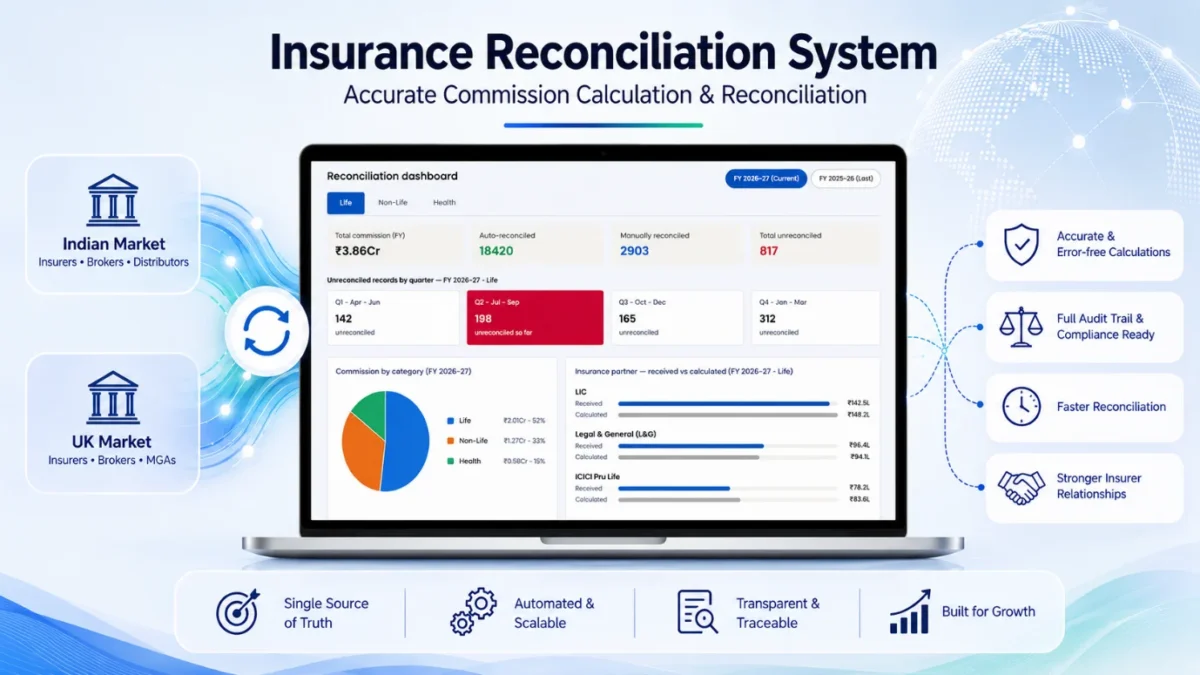
As insurance businesses expand across multiple insurers, product lines, brokers, and financial intermediaries, calculating and reconciling commissions grows more complex than spreadsheets and disconnected systems can handle. Every mistyped entry and every “we’ll check it later” mismatch carries a cost — in staff hours, compliance exposure, and strained insurer relationships. The Insurance Reconciliation System, built by Winsoft Technologies, removes that cost by automating commission calculation, data validation, and reconciliation on a single platform.

Where Commission Reconciliation Breaks Down

Fragmented, inconsistent data. Insurer details, product structures, and commission rates are often maintained separately across teams, with no single source of truth — so every calculation inherits that inconsistency.

Manual, error-prone processing. Large volumes of policy and transaction data are entered by hand, introducing errors that often go unnoticed until they’re far harder to fix.

Unverifiable figures. Commission calculated in spreadsheets typically lacks an audit trail, making discrepancies hard to trace — or to trust.

Lack of accountability. Without a structured review process, there’s often no record of who entered or approved master data — a liability during compliance reviews.

The result: finance and operations teams spend more time reconciling than analysing, while the organization carries ongoing compliance risk.

Is Manual Reconciliation Itself the Error?

Mismatches aren’t usually caused by a single mistake — they’re caused by the process used to catch them. When reconciliation depends on someone manually comparing spreadsheets line by line across thousands of policies, error isn’t the exception; it’s the expected outcome.

Manual reconciliation fails quietly. A missed row or an outdated rate doesn’t announce itself — it sits in the data until an audit or a revenue gap forces someone to go looking. By then, fixing it costs far more than preventing it would have.

The goal isn’t to make people more careful. It’s to remove manual matching from the process entirely.

How the Insurance Reconciliation System Closes the Gap

What’s needed is a single, centralized system that maintains accurate master data at the source, processes high transaction volumes reliably, calculates commission systematically, and reconciles it against insurer-reported figures automatically — with full traceability at every step. This is the Insurance Reconciliation System Winsoft Technologies has built. Every problem named above has a corresponding answer built into it.

Centralised masters solve fragmented data

The Insurance Reconciliation System maintains a single source of truth for insurer details, product and business-class hierarchies, premium frequencies, policy status codes, and payment methods — along with rate masters for Normal, Clawback, and Loyalty Commission, and an Event Master tracking lifecycle changes like In-Force, Lapsed, Cancelled, and Matured. When this data lives in one place, every downstream calculation inherits consistency.

Structured bulk uploads solve manual processing

Instead of hand entry, transaction volumes move through structured file uploads — similar in purpose to a Commission / Business Statement (often called a bordereaux), the standard submission format between brokers, MGAs, and insurers. Policy data, status, premium transactions, and payouts all follow the same validation logic: files are checked for quality, valid and invalid records are separated automatically, and a summary shows exactly what needs correction.

Maker-Checker solves unverifiable figures

No single person can create and finalise a record alone. The Insurance Reconciliation System applies a Maker-Checker model — the Four Eyes Principle, a dual control standard widely used across regulated financial services in India, the UK, and other markets. One user submits a record; another reviews and authorises or rejects it before it goes live.

Automated reconciliation solves undetected mismatches

Commission is calculated for a selected insurer and date range directly from validated transaction data, with exceptions flagged automatically. An automated reconciliation engine then compares calculated commission against what was actually received, sorting every record as Matched, Received but Not Calculated, Calculated but Not Received, or Partial Match. Nothing is left to chance discovery.

Full reporting solves lack of accountability

A detailed Reconciliation Report, exportable by class of business, insurer, and date range, shows exactly where every policy stands — premium amounts, received vs. calculated commission, policy status, and branch details. Combined with the maker-checker trail, this gives compliance and audit teams a clear, traceable record of who did what, and when.

Insurance Reconciliation System — Advantages That Solve the Problem

ProblemHow the Insurance Reconciliation System Solves It
Fragmented, inconsistent dataCentralised masters give every team the same source of truth
Manual, error-prone processingStructured bulk uploads with automatic validation replace manual entry
Unverifiable commission figuresMaker-Checker dual control verifies every record before it goes live
Undetected mismatchesAutomated reconciliation surfaces every mismatch
Lack of accountabilityA full audit trail supports compliance and audit readiness

The outcome: faster settlements, fewer errors, stronger audit readiness, and more transparent relationships with insurers — at a scale spreadsheets can’t sustain.

Conclusion

Commission calculation and reconciliation sit at the heart of the relationship between insurers and their distribution partners — getting it wrong, or too slowly, costs trust and efficiency. Winsoft Technologies’ Insurance Reconciliation System solves this with centralised master management, automated calculation, built-in reconciliation, and maker-checker controls — part of Winsoft’s broader work in Insurance Distribution Software and Digital Transformation in the BFSI Sector.

FAQs

A dual control mechanism where one user creates a record and another reviews and authorises it before it goes live — a standard control in regulated financial services, including India and the UK.

Commission is calculated per insurer and date range from uploaded transaction data using predefined rate cards. Records that can't be processed cleanly are flagged for review.

It compares calculated commission against commission received and classifies each record as Matched, Received but Not Calculated, Calculated but Not Received, or Partial Match.

A detailed, exportable view of every policy's reconciliation status — premium amounts, commission rates, received vs. calculated figures, and branch details.


Categories
Blog

How BFSI Solutions Help Banks Reduce Operational Costs

Operational costs quietly eat into a bank’s profitability in ways that don’t always show up in a single line item. Manual processes, redundant paperwork, delayed reconciliations, and inefficient staffing models all add up over time. For banks operating in a competitive, tightly regulated environment, finding ways to reduce these costs without compromising service quality has become a genuine priority.

This blog looks at how the right technology and workforce solutions are helping banks bring operational costs down, practically and sustainably.

Where Do Operational Costs Actually Come From?

Before looking at solutions, it helps to understand where the biggest cost drains typically sit within a bank’s operations:

  • Manual data entry and repetitive back-office tasks
  • Reconciliation errors that require rework and correction
  • Underutilised or overstaffed teams during low-demand periods
  • Legacy systems requiring ongoing maintenance and manual workarounds
  • Compliance processes that rely heavily on manual documentation
  • Customer service inefficiencies leading to higher resolution times

Each of these, on its own, might seem manageable. Together, across a large banking operation, they represent a substantial and recurring cost burden.

How Do BFSI Solutions Address This?

Rather than applying generic business software to banking-specific problems, the technology platforms and service models grouped under BFSI Solutions in India are shaped around the operational realities banks actually face, including regulatory requirements, transaction volumes, and multi-stakeholder coordination.

1. Automation Reduces Repetitive Manual Work

A large share of a bank’s operational cost comes from tasks that don’t require judgment, just accuracy and consistency. Automating processes like data validation, document verification, and routine reconciliation frees up staff time for higher-value work while reducing the error-driven rework that manual processes often create.

2. Centralised Systems Cut Down Redundancy

When different departments operate on disconnected systems, the same data often gets entered or verified multiple times. Centralised platforms eliminate this redundancy, allowing information to flow across departments without repeated manual handling.

3. Better Compliance Reduces Costly Penalties

Non-compliance isn’t just a regulatory risk, it’s a direct financial one. Automated compliance tracking and audit trails reduce the likelihood of penalties while also cutting down the staff hours spent on manual compliance checks.

4. Scalable Systems Avoid Overstaffing

Traditional operations often require adding staff to handle volume spikes, then carrying that cost even during quieter periods. Digital platforms that scale processing capacity up or down based on demand help banks avoid this cost inefficiency.

Is Automation Alone Enough to Cut Costs Significantly?

This is a fair question, since technology alone doesn’t solve everything. Automation certainly reduces the cost of repetitive tasks, but banks still need skilled people to manage, maintain, and improve these systems over time. This is where workforce strategy becomes just as important as the technology itself.

Rethinking Workforce Costs Through Flexible Staffing

Hiring full-time, permanent staff for every technical requirement isn’t always the most cost-efficient approach, particularly for specialised skills needed only during specific project phases or peak periods.

Staff Augmentation Services allow banks to bring in skilled technology professionals on a flexible, as-needed basis, whether for system implementation, ongoing support, or scaling up during high-demand periods like IPO seasons or regulatory deadline crunches. This model reduces the long-term overhead associated with expanding permanent headcount, while still giving banks access to the expertise they need, when they need it.

Where This Model Typically Helps Most

  • Short-term technology implementation projects
  • Peak-period operational support
  • Specialised skill requirements that don’t justify full-time hires
  • Testing and quality assurance during system upgrades

By treating workforce needs as flexible rather than fixed, banks can align staffing costs much more closely with actual demand.

A Closer Look: Cost Reduction in Specific Banking Functions

Mutual Fund Distribution

Banks offering mutual fund distribution services often deal with high transaction volumes, complex commission structures, and frequent reconciliation requirements. Mutual Fund Software for Banks automates much of this back-office complexity, reducing the manual effort and associated staffing costs that come with manually tracking transactions, commissions, and NAV updates across multiple fund houses.

IPO and Capital Markets Processing

During IPO periods, application volumes can spike dramatically within short windows. Automated processing systems help banks handle this surge without the need for significant temporary staffing increases, keeping costs controlled even during high-pressure periods.

Insurance Distribution

Banks distributing insurance products benefit from automated commission tracking and compliance management, reducing the administrative overhead typically associated with managing multiple insurance partnerships manually.

Regional Considerations: Why Local Context Matters

Cost-efficiency strategies aren’t always uniform across regions. Banks looking for BFSI Solutions Mumbai often deal with high transaction density and a concentration of institutional clients, requiring systems built to handle significant volume without performance bottlenecks. Meanwhile, banks seeking BFSI Solutions Pune may prioritise solutions that support growing retail banking networks and expanding semi-urban customer bases.

Understanding these regional operational patterns helps banks choose solutions genuinely suited to their specific branch networks and customer demographics, rather than adopting a one-size-fits-all approach.

Measuring the Actual Cost Impact

To understand whether these solutions are genuinely reducing costs, banks should track metrics such as:

  • Reduction in manual processing hours per transaction type
  • Decrease in reconciliation errors and associated rework
  • Staffing cost trends relative to transaction volume growth
  • Compliance-related penalty or remediation costs over time
  • Turnaround time improvements across key operational processes

Tracking these consistently over time gives a much clearer picture of cost impact than looking at technology spend alone.

Common Pitfalls to Avoid

Even well-intentioned cost-reduction initiatives can fall short if certain factors are overlooked:

  • Underestimating implementation time, which can delay expected savings
  • Insufficient staff training, leading to underutilisation of new systems
  • Choosing generic solutions not tailored to banking-specific requirements
  • Ignoring integration needs with existing core banking systems

Avoiding these pitfalls generally comes down to careful planning and choosing solutions built specifically for the complexities of banking operations.

Conclusion

Reducing operational costs in banking isn’t about cutting corners, it’s about eliminating inefficiency wherever it exists, whether that’s in repetitive manual processes, rigid staffing models, or fragmented systems. By combining the right technology with flexible workforce strategies, banks can bring costs down meaningfully while maintaining, and often improving, the quality of service they deliver to customers.

FAQs

Q1. How do BFSI solutions specifically help reduce operational costs for banks?

They automate repetitive manual processes, centralise fragmented systems, improve compliance accuracy, and allow staffing to scale flexibly with actual demand, all of which reduce unnecessary operational spending.

Q2. Is staff augmentation more cost-effective than hiring full-time employees?

For specialised or short-term technology needs, it often is, since it avoids the long-term overhead of permanent hires while still providing access to skilled expertise when required.

Q3. Which banking functions typically see the most cost savings from automation?

Functions with high transaction volumes and complex reconciliation needs, such as mutual fund distribution, IPO processing, and insurance commission tracking, tend to see significant cost benefits from automation.

Q4. Do regional differences affect which BFSI solutions a bank should choose?

Yes, transaction volumes, customer demographics, and branch network patterns can vary significantly by region, making it important to choose solutions suited to local operational realities.

Q5. What’s the biggest mistake banks make when trying to reduce operational costs through technology?

Choosing generic, non-specialised solutions or underestimating the time and training needed for proper implementation are among the most common pitfalls that delay expected cost savings.

Categories
Blog

How IPO Application Software Simplifies the IPO Journey

Anyone who has applied for shares in a public offering knows the drill: fill in details, block funds, wait, check status, hope for allotment. What most applicants don’t see is the sheer operational machinery working behind the scenes to make that simple-looking process happen accurately and on time. For banks, registrars, and financial institutions, that machinery increasingly runs on dedicated software built specifically for this purpose.

Let’s look at how this software actually simplifies the IPO journey, both for the institutions managing it and the investors applying through it.

The IPO Journey, From an Investor’s Perspective

To understand why this software matters, it helps to first walk through what an investor experiences when applying for an IPO:

  • Submitting an application with bid details through a bank or broker
  • Having the bid amount blocked in their account
  • Waiting through the subscription period
  • Checking allotment status once the process closes
  • Receiving shares (if allotted) or having blocked funds released

On the surface, this looks straightforward. But each of these steps involves coordination between multiple systems and parties, and any delay or error at any point directly affects the investor’s experience.

What Happens Behind the Scenes?

Here’s where it gets more complex. Behind each investor application, institutions need to:

  • Validate application details against regulatory requirements
  • Block and later release funds accurately, often across thousands of accounts simultaneously
  • Coordinate with registrars and depositories for share allotment
  • Generate reports for regulatory bodies and stakeholders
  • Handle investor queries and status updates at scale

During peak subscription periods, application volumes can spike dramatically within a short window, and manual processes simply cannot handle this kind of surge reliably.

What Is IPO Application Software?

IPO Application Software is built specifically to manage this high-volume, time-sensitive workflow. It automates the collection, validation, and processing of investor applications, while coordinating fund blocking, allotment, and refund processes across the institutions involved.

Rather than treating each application as a manual entry requiring individual attention, the software processes large volumes systematically, applying consistent rules and checks across every submission.

Core Functions It Typically Handles

  • Application Capture and Validation – The software captures investor details, bid quantities, and price information, checking for completeness and accuracy before processing continues.
  • Fund Blocking Coordination – Working closely with banking systems, it manages the blocking of application amounts in investor accounts, ensuring funds are available and correctly earmarked.
  • Bid Modification and Cancellation – Investors often need to modify or cancel bids during the subscription window. The software handles these changes while maintaining an accurate, updated record.
  • Allotment Processing Support – Once the subscription period closes, the software supports the allotment process by providing clean, validated application data to registrars.
  • Refund and Unblocking Management – For applications that don’t receive full allotment, the software coordinates the release of blocked funds accurately and promptly.

Why Does Speed Matter So Much Here?

IPO subscription windows are typically short, often just a few days, and application volumes tend to concentrate heavily toward the closing hours. A question worth asking is: What actually happens when application volumes surge unexpectedly?

Without automated systems, this surge can overwhelm manual processing capacity, leading to delays, errors, or even application rejections due to processing bottlenecks. Automated software is built to handle these volume spikes consistently, processing applications in real time regardless of how concentrated the submission pattern becomes.

Benefits for Different Stakeholders

For Banks

Banks benefit from reduced manual workload, fewer processing errors, and the ability to handle significantly higher application volumes without proportionally increasing staff involvement.

For Registrars

Registrars receive cleaner, pre-validated data, which simplifies the allotment process and reduces the back-and-forth typically needed to resolve application discrepancies.

For Investors

Investors experience faster confirmation, more accurate fund blocking and release, and clearer visibility into their application status throughout the process.

For Regulators

Regulatory bodies benefit from improved transparency and more reliable audit trails, both of which support better oversight of the public offering process.

How Does This Fit Into a Bank’s Broader Technology Ecosystem?

IPO application software rarely operates in isolation. For banks specifically, it needs to integrate closely with core banking systems, customer databases, and payment infrastructure. This is where the connection to broader Banking Technology Solutions becomes important, ensuring that IPO-specific processes work seamlessly alongside a bank’s existing digital infrastructure rather than functioning as a disconnected add-on.

This integration also matters for scalability. As banks handle multiple IPOs across a financial year, sometimes overlapping, having systems that work well together reduces operational friction considerably.

Connecting With the Wider Financial Software Ecosystem

Beyond banking integration, IPO application software also typically connects with depositories, clearing corporations, and other Financial Software Solutions involved in the capital markets ecosystem. This interconnected approach ensures that data flows accurately between all parties involved in an IPO, from the initial application to final share credit in an investor’s demat account.

Common Challenges Institutions Should Anticipate

Even with capable software in place, institutions should be prepared for certain recurring challenges:

  • Peak-hour traffic management during the final hours of subscription windows
  • Data reconciliation across multiple systems and stakeholders
  • Handling application errors gracefully without disrupting the broader process
  • Staying updated with evolving regulatory requirements around IPO processing

Planning for these challenges in advance, rather than reacting to them during a live IPO, tends to make a significant difference in how smoothly the process runs.

What Should Institutions Consider When Evaluating Software?

Since IPO application software plays such a critical role during high-stakes periods, evaluation should be thorough. Key considerations include:

  • How well does the system handle peak-volume traffic without slowdowns?
  • What level of integration does it offer with existing banking and depository systems?
  • How robust are its validation and error-handling capabilities?
  • What reporting and compliance features does it provide?
  • How reliable is vendor support during live IPO periods?

Given how time-sensitive IPO processing is, reliability under pressure often matters just as much as day-to-day functionality.

Conclusion

The IPO journey may look simple from an investor’s screen, but the operational reality behind it is considerably more complex. Dedicated application software brings structure, speed, and accuracy to this process, benefiting banks, registrars, regulators, and investors alike. As IPO activity continues to grow and application volumes climb, having reliable, well-integrated software in place isn’t just a convenience, it’s what allows the entire process to function smoothly under real-time pressure.

FAQs

Q1. What is IPO application software used for?

It automates the capture, validation, and processing of investor applications during a public offering, including fund blocking, bid modifications, and refund coordination.

Q2. Why is speed so important in IPO application processing?

Subscription windows are short, and application volumes often surge near the closing period, making automated, real-time processing essential to avoid delays or errors.

Q3. How does this software help banks specifically?

It reduces manual workload, minimises processing errors, and allows banks to handle high application volumes efficiently, particularly during peak subscription periods.

Q4. Does IPO application software work independently, or does it need to integrate with other systems?

It typically needs close integration with banking systems, depositories, and registrars to ensure smooth, accurate data flow throughout the IPO process.

Q5. What should institutions prioritise when choosing this kind of software?

Reliability under high traffic, strong integration capabilities, robust validation features, and dependable support during live IPO periods are all important factors.

Categories
Blog

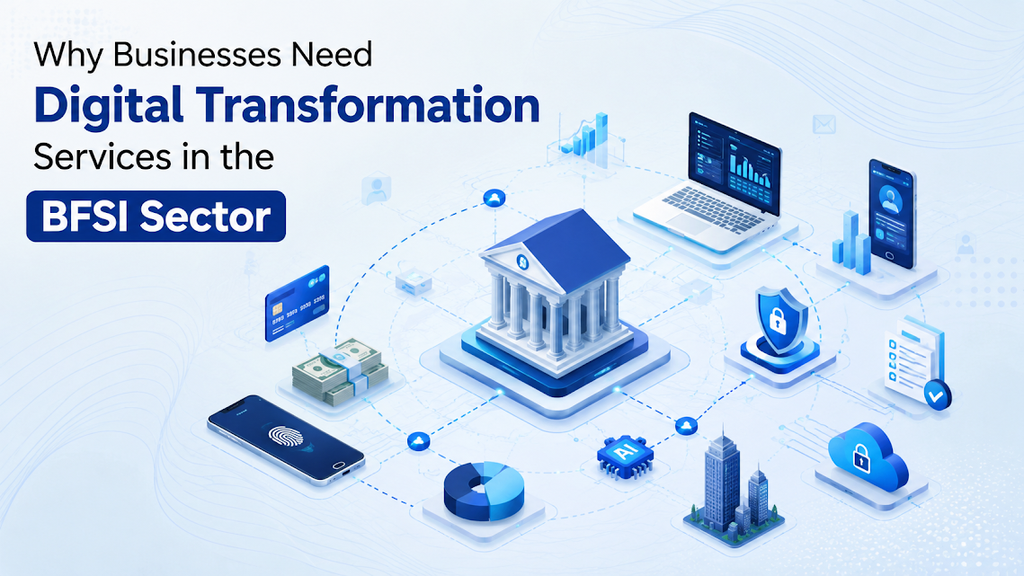
Why Businesses Need Digital Transformation Services in the BFSI Sector

Ask any banking or financial services leader what keeps them up at night, and “staying relevant” will likely top the list. Customer expectations have shifted dramatically, regulatory requirements keep evolving, and legacy systems that once worked fine are now struggling to keep pace. The BFSI sector, perhaps more than any other, finds itself at a crossroads where digital adoption isn’t optional anymore — it’s foundational to survival.

This blog unpacks why that shift matters, what it actually involves, and how businesses across banking, insurance, and financial services can approach it practically.

The Pressure Points Driving Change

Before looking at solutions, it’s worth understanding what’s actually pushing BFSI businesses toward digital adoption in the first place.

  • Rising customer expectations. Today’s customers, whether retail investors or corporate clients, expect instant access, real-time updates, and self-service options. A process that takes days through manual channels feels unacceptable when everything else in their life happens at the tap of a screen.
  • Regulatory complexity. Compliance requirements in BFSI change frequently and carry serious consequences for non-compliance. Manual tracking simply cannot keep up with the pace and precision regulators now expect.
  • Operational inefficiency. Legacy systems, often built on outdated architecture, create bottlenecks. Data sits in silos, reconciliation takes longer than it should, and scaling operations becomes a resource-heavy exercise rather than a smooth process.
  • Competitive pressure. As more players, including newer, digitally native entrants, raise the bar on service delivery, traditional institutions face growing pressure to modernise or risk losing relevance.

What Do Digital Transformation Services Actually Cover?

The term gets used loosely, so it helps to define it clearly. Digital Transformation Services typically involve reimagining how a business operates, using technology to streamline processes, improve customer experience, and enable data-driven decision-making, rather than simply digitising existing paper-based workflows.

For BFSI specifically, this can include:

  • Modernising legacy core systems
  • Automating manual, repetitive back-office processes
  • Building customer-facing digital platforms and self-service portals
  • Integrating data across departments for unified visibility
  • Strengthening cybersecurity and compliance infrastructure
  • Enabling cloud adoption for scalability and cost efficiency

The scope is broad, which is exactly why a structured, phased approach tends to work better than attempting everything at once.

Is Digital Transformation Really Necessary, or Just a Trend?

This is a fair question, and one many decision-makers genuinely wrestle with. Isn’t this just another buzzword that will fade?

The honest answer is that while the terminology may evolve, the underlying shift is structural, not cyclical. Customer behaviour has permanently changed. Regulatory bodies increasingly expect digital-first compliance mechanisms. And operational costs of maintaining outdated systems only grow over time, both in direct expense and in opportunity cost from slower processes.

Businesses that treat this as optional often find themselves playing catch-up later, at a higher cost and with greater disruption than a planned, gradual transformation would have required.

Key Benefits for BFSI Businesses

1. Improved Customer Experience

Digital platforms allow customers to complete transactions, track applications, and access information without depending on branch visits or lengthy call centre interactions. This convenience directly influences customer satisfaction and retention.

2. Faster, More Accurate Operations

Automation reduces the time spent on repetitive manual tasks, from document verification to reconciliation, while also lowering the risk of human error in high-stakes financial processes.

3. Stronger Compliance Posture

Automated compliance tracking and audit trails make it considerably easier for institutions to stay aligned with regulatory requirements, reducing both risk and administrative burden.

4. Better Data-Driven Decisions

When data flows freely across departments instead of sitting in isolated systems, leadership gains clearer visibility into performance, risk, and opportunity, enabling faster, more informed decisions.

5. Scalability Without Proportional Cost

Digital infrastructure, particularly cloud-based systems, allows businesses to scale operations up or down based on demand without the heavy fixed costs associated with traditional infrastructure expansion.

How Does This Play Out in Specific BFSI Functions?

Banking Operations

From account opening to loan processing, digitisation significantly reduces turnaround times while improving accuracy and customer transparency throughout each stage.

Insurance Distribution

Digital platforms streamline policy issuance, claims processing, and commission management, particularly valuable given how many stakeholders are typically involved in insurance distribution chains.

Capital Markets and Public Offerings

Processes like IPO applications, historically paperwork-heavy and time-sensitive, benefit enormously from automation. IPO Management Software, for instance, allows institutions to handle high volumes of applications, allotments, and compliance checks with far greater speed and accuracy than manual methods ever could.

Wealth and Asset Management

Portfolio tracking, reporting, and client communication all become more efficient when built on integrated digital platforms rather than fragmented manual processes.

The India Context: Why It Matters Here Specifically

India’s BFSI sector operates under a unique combination of factors: a rapidly growing digital-first customer base, an evolving regulatory environment, and increasing financial inclusion initiatives extending services to previously underserved populations. This creates both significant opportunity and real complexity.

Businesses looking for BFSI Solutions in India need platforms and services that understand these local nuances, from regulatory frameworks specific to Indian financial markets to the operational realities of serving a diverse, geographically spread customer base across urban and semi-urban regions. Generic global solutions don’t always translate well without this contextual understanding.

Common Challenges in the Transformation Journey

Even well-planned digital transformation efforts run into obstacles:

  1. Legacy system integration can be technically complex and time-consuming.
  2. Change management across large employee bases requires sustained effort.
  3. Data migration demands careful planning to avoid errors or loss.
  4. Budget constraints can limit the pace or scope of transformation initiatives.
  5. Skill gaps internally may require external expertise to bridge them effectively.

Recognising these challenges early, and planning around them, tends to make the difference between a transformation effort that stalls and one that delivers sustained results.

A Practical Approach: Where Should Businesses Start?

Rather than attempting a complete overhaul immediately, many successful transformations follow a phased approach:

  • Start with a clear assessment of current pain points and priorities.
  • Identify quick wins that demonstrate value early, building internal buy-in.
  • Gradually modernise core systems, rather than a single disruptive migration.
  • Continuously gather feedback from both customers and internal teams.
  • Build in flexibility to adapt as technology and regulations evolve.

This measured approach reduces risk while still moving the organisation meaningfully forward.

Conclusion

Digital transformation in BFSI isn’t about chasing the latest technology trend, it’s about building the operational foundation needed to meet rising customer expectations, navigate regulatory complexity, and compete effectively in an increasingly digital-first market. Businesses that approach this thoughtfully, with clear priorities and realistic timelines, position themselves not just to keep pace with change, but to genuinely benefit from it over the long term.

FAQs

1. Why is digital transformation particularly important for BFSI businesses?

The sector faces unique pressures from regulatory complexity, rising customer expectations, and competitive dynamics, making digital adoption essential rather than optional for long-term relevance.

2. Does digital transformation mean replacing all legacy systems at once?

Not necessarily. Most successful transformations follow a phased approach, gradually modernising systems rather than attempting a complete overhaul simultaneously.

3. How does digital transformation help with regulatory compliance?

Automated tracking, audit trails, and standardised processes make it easier for institutions to stay aligned with evolving regulatory requirements while reducing manual compliance burden.

4. What role does automation play in areas like IPO processing?

Automation significantly speeds up high-volume, time-sensitive processes like IPO applications and allotments, while reducing the risk of manual errors during peak periods.

5. What should BFSI businesses look for in a transformation partner?

Understanding of local regulatory context, proven experience in financial services, scalable technology solutions, and a phased implementation approach are all important considerations.

Categories
Blog

National Pension System Software: Complete Guide

Retirement planning in India has changed significantly over the past two decades, and much of that shift can be traced back to the introduction of the National Pension System. What started as a scheme primarily for government employees has grown into a widely adopted retirement savings option across sectors. Behind this growth, however, sits a fairly intricate operational structure, one that depends heavily on the technology systems managing it.

This guide breaks down what National Pension System software actually does, why it matters, and what banks, financial institutions, and intermediaries should know about it.

Understanding the National Pension System First

Before getting into the software itself, it helps to first understand the retirement scheme it is designed to support. The National Pension System is a voluntary, defined-contribution retirement scheme where subscribers contribute regularly during their working years, with the accumulated corpus available upon retirement, subject to withdrawal rules.

Managing this at scale involves multiple parties:

  • Points of Presence (banks and financial institutions that onboard subscribers)
  • Central Recordkeeping Agencies that maintain subscriber records
  • Pension fund managers who invest contributions
  • Regulatory bodies overseeing compliance
  • Subscribers themselves, who need visibility into their accounts

Coordinating between all these parties manually would be extremely difficult, which is exactly why dedicated software has become essential.

What Does National Pension System Software Actually Do?

National Pension System Software is designed to handle the operational backbone of NPS administration. It typically covers subscriber onboarding, contribution processing, account tracking, and reporting, all in compliance with regulatory guidelines set for the scheme.

For institutions acting as Points of Presence, this software becomes the primary interface through which they manage day-to-day NPS-related activities on behalf of their customers.

Key Functions Covered by the Software

Subscriber Onboarding and KYC
Digital onboarding processes, including document verification and KYC checks, allow new subscribers to be registered quickly and accurately.

Contribution Management
The software tracks regular and one-time contributions, ensuring they’re correctly allocated to the subscriber’s account and reported to the relevant recordkeeping agency.

Account Statement Generation
Subscribers need periodic visibility into their contributions and corpus growth. Automated statement generation reduces the manual reporting burden on institutions.

Withdrawal and Exit Processing
Handling partial withdrawals, exits, and annuity purchase processes requires careful adherence to regulatory rules, which the software helps enforce consistently.

Compliance and Audit Trail
Given the regulated nature of pension products, maintaining a clear, timely audit trail is a core requirement that good software addresses by design.

How Is This Different From General Pension Management Software?

A fair question at this point is whether NPS-specific software is really necessary, or whether broader pension tools can do the job just as well.

Generally, Pension Management Software covers a wider range of retirement and pension products, including employer-sponsored pension schemes, gratuity management, and other retirement benefit structures. National Pension System software, by contrast, is built specifically around the operational and regulatory requirements unique to NPS, such as its specific contribution limits, tax treatment, and withdrawal rules. Institutions dealing primarily with NPS often find that purpose-built software offers more precise handling of these scheme-specific nuances than a generalised pension platform.

That said, many institutions offering multiple retirement products do look for platforms that can handle both, provided the NPS-specific rules aren’t compromised in the process.

Why Accuracy Matters So Much in NPS Administration

Because NPS involves long-term contributions that directly affect a subscriber’s retirement corpus, even small errors can have outsized consequences over time. A miscalculated contribution or a delayed update to a subscriber’s record isn’t just an administrative inconvenience, it can affect the subscriber’s actual retirement savings.

This is why institutions place such heavy emphasis on:

  • Accurate, real-time contribution tracking
  • Timely reconciliation with recordkeeping agencies
  • Clear audit trails for every transaction
  • Reliable subscriber communication and statement delivery
  • Strong data security given the sensitivity of financial and personal information

What About Atal Pension Yojana?

The Atal Pension Yojana is a related but distinct scheme, focused primarily on providing guaranteed pension income to workers in the unorganised sector. While it shares some administrative similarities with NPS, such as subscriber onboarding and contribution tracking, it operates under its own set of rules regarding contribution amounts, age eligibility, and pension payout structures.

Because of these differences, institutions handling both schemes often rely on Atal Pension Yojana Software alongside their NPS systems to ensure that each scheme’s specific requirements are managed correctly, rather than trying to force both into a single generic framework.

Common Challenges Institutions Face

Even with good software in place, institutions administering NPS often encounter a few recurring challenges:

  • Data reconciliation delays between the institution and central recordkeeping agencies
  • Subscriber grievance handling, particularly around contribution mismatches
  • Keeping pace with regulatory updates, which can affect contribution limits or withdrawal rules
  • Ensuring smooth digital onboarding for subscribers with limited digital literacy, particularly in semi-urban and rural areas

Addressing these challenges usually comes down to a combination of well-designed software and clear internal processes for handling exceptions.

What Should Institutions Look For in NPS Software?

When evaluating a platform, a few practical considerations tend to matter most:

  • How well does it integrate with central recordkeeping systems?
  • Does it support both digital and assisted onboarding processes?
  • How robust is its compliance and reporting functionality?
  • Can it scale as subscriber numbers grow over time?
  • What level of support is available for regulatory updates and system changes?

Working through these questions carefully before implementation tends to save institutions considerable operational friction later on.

Conclusion

As retirement planning continues to gain importance among Indian households, the systems supporting schemes like NPS need to be accurate, compliant, and easy for both institutions and subscribers to use. National Pension System Software plays a central role in making this possible, handling everything from onboarding to withdrawal processing with the precision that long-term retirement savings genuinely require. For institutions involved in pension administration, choosing the right technology isn’t just an operational decision, it directly affects the trust subscribers place in their retirement planning journey. 

FAQs

1. What is National Pension System software used for?

It manages the operational aspects of NPS administration, including subscriber onboarding, contribution tracking, account statements, and withdrawal processing.

2. Who typically uses this kind of software?

Points of Presence(POPs) such as banks and financial institutions, along with central recordkeeping agencies, use it to manage NPS-related activities.

3. Is National Pension System software different from general pension management tools?

Yes, it’s built specifically around NPS rules and requirements, while general pension management software often covers a broader range of retirement products.

4. How does this software help with compliance?

It maintains detailed audit trails and enforces scheme-specific rules around contributions and withdrawals, helping institutions stay compliant with regulatory requirements.

5. Can the same platform handle both NPS and Atal Pension Yojana?

Some platforms do support both, but given the distinct rules governing each scheme, institutions often use dedicated modules or software for each to ensure accurate handling.

Categories
Blog

Insurance Distribution Software For Banks And Insurance Companies

Insurance distribution today rarely runs through a single process. Government-backed schemes, private life and non-life products, sales force onboarding, and policy renewals all need to be managed simultaneously, often across hundreds of branches and thousands of relationship managers. Behind this everyday complexity sits a layer of software most customers never see, but one that determines how smoothly the entire distribution chain actually works.

This blog looks at what insurance distribution software typically covers, based on how these platforms are actually built and used across banks and financial distributors.

Why Insurance Distribution Needs Dedicated Software

Distributing insurance, particularly at scale, involves several distinct processes running in parallel:

  • Onboarding customers for government-backed insurance schemes
  • Managing life and non-life policy distribution through back-office processing
  • Training relationship managers before they can sell insurance products
  • Enrolling new policies and automating recurring premium payments

Handling each of these manually, across a large branch network, creates significant room for delays, inconsistent processes, and compliance gaps. Purpose-built software exists specifically to bring structure to this complexity.

Supporting Government-Backed Insurance Schemes

A meaningful part of insurance distribution in India today involves government social security schemes, such as those offering affordable life and accident insurance to underserved populations. Software built for this purpose typically includes:

  • A browser-based, mobile-responsive interface
  • A Back Office for internal processing
  • A Front Office for customer-facing onboarding
  • Online APIs to support digital enrolment and renewal

This kind of setup allows banks to onboard and renew customers under these schemes efficiently, without relying on manual, paper-based registration at the branch level.

Why Does This Matter for Financial Inclusion?

A fair question here is why banks would need dedicated software just for government scheme distribution, rather than folding it into general insurance processes.

The answer lies in scale and reach. These schemes are often aimed at large, geographically spread populations, many of whom may have limited prior exposure to formal insurance products. Dedicated digital onboarding and renewal processes make it possible to serve this scale efficiently, while keeping the process simple enough for both customers and branch staff to use confidently.

Life and Non-Life Insurance Distribution

Beyond government schemes, banks and distributors also handle a broader range of life and non-life insurance products. Insurance Distribution Software built for this purpose typically provides:

  • A seamless Back Office for managing overall processing
  • A user-friendly Front Office for customer and advisor interactions
  • An exhaustive reporting feature to track distribution performance

This combination allows distributors to manage day-to-day policy distribution activity while maintaining visibility into how the business is performing across products and channels.

Training the Sales Force

Insurance distribution isn’t just about the customer-facing process, it also depends heavily on properly trained relationship managers. Given regulatory expectations around who can sell insurance products, software designed for this purpose focuses specifically on:

  • Digitally onboarding relationship managers into the training process
  • Tracking training completion and status
  • Reducing the administrative burden of managing this manually across branches

For banks with large distribution networks, digitising this process significantly reduces the coordination effort required to keep sales staff trained and ready before they begin selling.

Policy Enrolment and Premium Automation

The final piece of the distribution chain involves the ongoing lifecycle of a policy once it’s sold. This includes:

  • Entering new policies for insured customers
  • Automating yearly premium payment processing

Automating this stage reduces the manual follow-up typically required to ensure premiums are paid on time, helping distributors maintain consistent policy servicing without constant manual tracking.

A Question Worth Asking: How Does This Fit Into a Bank’s Broader Systems?

A practical question for any bank evaluating this kind of software is how it fits alongside everything else already running internally. Since insurance distribution activity, onboarding, renewals, and premium processing ultimately touches customer accounts and payment flows, it’s worth considering how closely a platform can work with a bank’s existing Banking Technology Solutions, rather than functioning as a completely disconnected system. This is a factor banks may want to evaluate directly with any vendor, since the level of integration can vary.

What Should Banks and Distributors Look for in a Platform?

When evaluating options across these different functions, insurance schemes, general life and non-life distribution, RM training, and policy servicing, a few practical questions help guide the decision:

  • Does it support both government scheme distribution and broader life/non-life products?
  • How well does it handle relationship manager onboarding and training tracking?
  • Does it automate recurring processes like premium payments?
  • What level of reporting visibility does it offer across the distribution chain?
  • How well can it integrate with a bank’s existing customer and account systems?

Working through these questions helps ensure the chosen platform genuinely covers the full scope of a distributor’s insurance operations, rather than addressing only one part of it.

Conclusion

Insurance distribution involves considerably more than a single sales transaction. From onboarding customers into government-backed schemes to managing life and non-life policy distribution, training relationship managers, and automating premium payments, each stage benefits from dedicated digital processes. For banks and distributors managing this at scale, software built specifically around these functions helps keep operations consistent and considerably easier to manage across large branch networks.

FAQs

Q1. What does insurance distribution software typically cover?

It typically covers government scheme onboarding and renewal, life and non-life policy distribution processing, relationship manager training, and policy enrolment with premium automation.

Q2. Why is government scheme distribution handled separately from general insurance products?

These schemes are often aimed at large, underserved populations, so dedicated digital onboarding and renewal processes help distributors manage this scale efficiently.

Q3. How does this software help with relationship manager training?

It supports digital onboarding into the training process, helping banks track training completion and status before staff begin selling insurance products.

Q4. Does this kind of software automate premium payments?

Yes, it typically supports automation of yearly premium payment processing as part of the broader policy servicing process.

Q5. Does insurance distribution software need to integrate with a bank’s other systems?

Since it touches customer accounts and payment processes, integration with a bank’s existing systems is an important factor to evaluate when choosing a platform.

Categories
Blog

The Real ROI Of Investing In Wealth Management Software

When financial institutions think about technology investments, the first question that comes up is almost always the same: is it worth the cost? For wealth management firms, this question carries extra weight because the software isn’t just a back-office tool, it directly touches client relationships, portfolio performance, and regulatory standing.

Let’s move beyond the sales pitch and look honestly at where the real returns come from when firms invest in the right technology.

Why “ROI” Means More Than Cost Savings Here

Return on investment is often measured purely in rupees saved. But in wealth management, the returns show up in several different forms, some financial, some operational, and some reputational.

Before diving into numbers, it helps to ask: what are firms actually trying to achieve when they adopt new platforms?

  • Reducing time spent on manual, repetitive tasks
  • Improving accuracy in portfolio reporting and compliance
  • Delivering a better, more personalised client experience
  • Growing your business and managing more clients without having to hire more staff
  • Staying competitive as client expectations shift toward digital-first service

With that context, the ROI conversation becomes much broader than a simple cost-benefit spreadsheet.

1. Time Savings That Translate Directly Into Capacity

One of the most immediate returns comes from time. Relationship managers and advisors who previously spent hours compiling portfolio reports or reconciling data across spreadsheets can now access this information instantly through a centralised system.

Wealth Management Software consolidates client portfolios, transaction histories, and performance data into a single view, cutting down the manual effort that used to eat into client-facing time. When advisors spend less time on data entry and more time on advisory conversations, the firm’s overall capacity effectively increases without adding new staff.

How Much Time Are We Really Talking About?

While exact figures vary by firm size and existing processes, the pattern is consistent: tasks that once took hours, such as generating consolidated portfolio statements, can often be completed in minutes once automated. This time reclaims itself in the form of more client interactions, faster turnaround on queries, and reduced backlog during busy periods.

2. Fewer Errors, Lower Compliance Risk

Manual processes are inherently prone to human error, and in wealth management, even small errors in reporting or compliance documentation can lead to significant consequences.

Automated systems reduce this risk by:

  • Standardising data entry and calculations
  • Flagging inconsistencies before they become bigger issues
  • Maintaining audit-ready records automatically
  • Applying compliance rules consistently across client accounts

This reduction in error rates isn’t always visible on a balance sheet immediately, but the avoided costs of regulatory penalties, client disputes, or reputational damage represent a meaningful, if less obvious, form of ROI.

3. Better Client Experience, Better Retention

Client expectations have shifted considerably. Investors today expect real-time access to their portfolio performance, transparent reporting, and quick responses to their queries.

Firms that invest in the right platforms are better positioned to meet these expectations. Features like real-time dashboards, automated alerts, and self-service portals give clients more visibility and control, which in turn builds trust and long-term loyalty.

Retained clients are, of course, far more valuable than newly acquired ones when you factor in acquisition costs, making client retention one of the more underrated returns on this kind of investment.

4. Dedicated Automation for Mutual Funds and Specialized Investments

Different financial products come with their own unique operational rules. A one-size-fits-all wealth platform often falls short when managing the specific needs of mutual funds, PMS, or gold bonds.

This is where purpose-built software makes a real difference. Dedicated systems automate product-specific tasks such as daily NAV updates, SIP tracking, order routing, redemption processing, and brokerage reconciliation. By using Mutual Fund Software built specifically for these workflows, firms avoid risky manual workarounds and keep their operations running smoothly without errors.

Is Building In-House Always the Right Approach?

A common question firms face is whether to build these systems internally or rely on external expertise. Building and maintaining wealth management technology in-house requires specialised skills that many firms don’t have readily available, and hiring full-time for every requirement isn’t always practical.

This is where Software Staff Augmentation becomes a valuable option. It allows firms to bring in skilled technology professionals on a flexible basis, whether for initial development, ongoing maintenance, or scaling up during periods of high demand, without the long-term overhead of expanding permanent headcount.

5. Scalability Without Proportional Cost Increases

As firms grow their client base, manual processes typically require proportional increases in staff to keep up. Technology changes this equation.

A well-implemented system can handle significantly more clients, transactions, and reporting requirements without a corresponding jump in operational costs. This scalability is often where the long-term ROI becomes most apparent, particularly for firms experiencing steady growth.

Measuring ROI: What Should Firms Actually Track?

To get a realistic picture of returns, firms should look at metrics such as:

  • Time saved per advisor on reporting and administrative tasks
  • Reduction in compliance-related errors or flagged issues
  • Client retention and satisfaction scores over time
  • Faster growth in client investments (AUM) compared to team size
  • Speed of onboarding new clients or products

Tracking these metrics over a defined period gives a clearer, more grounded picture of value than looking at cost savings alone.

Setting Realistic Expectations

It’s worth noting that ROI from these investments doesn’t materialise overnight. Implementation, staff training, and process adjustments all take time. Firms that see the most meaningful returns are typically those that approach the transition with a clear plan, realistic timelines, and ongoing evaluation rather than expecting immediate transformation.

Conclusion

The real ROI of investing in Wealth Management Software isn’t captured in a single number. It shows up gradually, through time saved, errors avoided, clients retained, and operations scaled more efficiently. Firms that look beyond upfront costs and evaluate these broader, longer-term returns are better positioned to make technology decisions that genuinely strengthen their business over time.

FAQs

Q1. How long does it typically take to see ROI from wealth management software?

This varies by firm, but most organisations begin seeing operational benefits, such as time savings, within the first few months, while broader financial returns often become clearer over a year or more.

Q2. Does wealth management software only benefit large firms?

No, firms of various sizes can benefit, particularly smaller firms looking to scale operations without significantly increasing headcount.

Q3. What’s the difference between wealth management software and mutual fund software?

Wealth management software typically covers broader portfolio and client management functions, while mutual fund software focuses specifically on fund tracking, NAV updates, and related processes.

Q4. Why would a firm consider staff augmentation instead of hiring full-time?

It offers flexibility to access specialised skills for specific projects or periods of growth without the long-term commitment of permanent hires.

Q5. What metrics best reflect the ROI of this kind of technology investment?

Time saved on manual tasks, reduction in compliance errors, client retention rates, and scalability of operations relative to headcount are all useful indicators.

Categories
Blog

IPO Management Software: Benefits, Features & Use Cases

Taking a company public is one of the most significant milestones in its journey, but it is also one of the most complex from an operational standpoint. Between capturing thousands of investor applications, blocking funds accurately, coordinating with exchanges, and meeting tight regulatory timelines, banks handling primary market issues have a lot to manage within very short windows. This is exactly where dedicated technology steps in to simplify what was once a highly manual and error-prone process. In this blog, we explore what IPO management software actually does, its key features, and how it helps banks and brokers handle primary market applications more efficiently.

What Is IPO Management Software?

IPO Management Software is a specialised digital platform built to digitise and automate primary market application processing. It covers products such as IPOs, FPOs, NFOs, Rights Issues, and Debt/NCD instruments. Rather than relying on scattered paperwork, manual verification, and branch-by-branch coordination, banks acting as Self Certified Syndicate Banks (SCSBs) can manage the entire application lifecycle — from registration to allotment monitoring — through a single, centralised system.

Why Does Primary Market Processing Require Specialised Software?

Handling primary market applications isn’t just about collecting forms. It’s a regulated, time-bound process where accuracy and speed both matter enormously. So, what makes this particularly challenging without the right tools?

  • Processing large volumes of applications within short subscription windows
  • Supporting multiple application modes, including ASBA, Syndicate ASBA, and Physical/Non-ASBA applications
  • Managing category-wise cut-off timings for retail and HNI applicants across branches and central office
  • Accurately blocking and releasing funds through lien marking and removal
  • Verifying investor details such as PAN before applications are submitted
  • Maintaining compliance with SEBI, NSE, and BSE reporting requirements

Given this complexity, banks and brokers increasingly rely on purpose-built platforms rather than manual, branch-level coordination.

Key Features of IPO Management Software

1. Multi-Mode, Multi-Channel Application Processing: The software supports ASBA, Syndicate ASBA, and Physical/Non-ASBA applications, giving banks flexibility in how they onboard investor applications. Investors, in turn, can apply through internet banking, handheld devices, or channel partners such as brokers.

2. Core Banking Integration for Fund Blocking: Integration with core banking systems such as Finacle and FlexCube, allows the software to manage lien marking, lien removal, and fund transfer directly, ensuring application amounts are blocked and released accurately without manual reconciliation between systems.

3. Bulk Application Handling: Banks dealing with high application volumes benefit from bulk upload support for application forms, along with API and file-based interfaces with NSE and BSE for streamlined processing.

4. Investor Verification and Third-Party Integration: Online PAN verification through NSDL, combined with application registration APIs for third-party brokers, helps validate investor details early and reduces the risk of application rejections.

5. Category-Wise Cut-Off Management: Retail and HNI applications often follow different cut-off timelines. The software supports this distinction across branches and the central office, helping banks stay aligned with exchange requirements.

6. Application Registration to Allotment Monitoring: A single-click dashboard allows banks to monitor the full journey of an application, from registration through to the allotment process, giving branch and central teams clear visibility without needing to chase updates manually.

7. Automated Income and Commission Calculation: For banks and brokers earning commissions on primary market distribution, automated income and commission calculation simplifies billing and invoice generation considerably, reducing manual computation errors.

8. Maker/Checker Controls and Audit Support: Given the regulatory sensitivity of primary market processing, maker/checker workflows across masters and transactions support the audit and security requirements banks are expected to meet.

9. Reconciliation :Across both applications and funds ensures that any mismatches are identified and corrected early, rather than surfacing as problems later in the process.

Is Fund Blocking Handled Automatically?

A common question banks ask when evaluating this kind of software is whether fund blocking genuinely happens without manual branch intervention. Because the software integrates directly with core banking platforms for lien marking and removal, fund blocking and release can happen automatically as part of the application workflow, rather than requiring branch staff to manually place or lift holds on investor accounts. This significantly reduces both processing time and the risk of blocking errors during high-volume subscription periods.

Business Reporting and Compliance

Beyond day-to-day processing, the software typically supports a structured suite of reports, including:

  • MIS Reports for operational visibility
  • Audit Reports for internal and external review
  • Posting Reports for transaction-level tracking
  • Product-wise Reports across IPO, FPO, NFO, and other instruments
  • Compliance reports aligned with SEBI, NSE, and BSE requirements

This reporting layer is particularly important for banks that need to demonstrate regulatory compliance across multiple primary market products simultaneously.

Benefits of Using IPO Management Software

Adopting a dedicated platform for primary market processing offers several tangible advantages:

  • Automated fund blocking and bulk application handling can help reduce manual processing time during high-volume subscription windows.
  • Built-in reconciliation and maker/checker controls support fewer manual errors in application and fund data.
  • A single-click dashboard gives banks a way to track applications through to the allotment stage in one place.
  • Simplified billing through automated commission and income calculation.
  • Stronger compliance posture with SEBI, NSE, and BSE-aligned reporting.
  • Granular access control, supporting internal audit and security requirements.

Common Use Cases

For Banks Acting as Self-Certified Syndicate Banks Banks use this software to manage the full application lifecycle across branches, from bulk application uploads to fund blocking and compliance reporting. For Brokers and Channel Partners, Brokers submit applications digitally through APIs, supporting bid, rebid, and withdrawal actions while staying integrated with the bank’s back-office processing. For Multiple Primary Market Instruments, the same platform typically supports IPOs, FPOs, NFOs, Rights Issues, and Debt/NCD instruments, allowing institutions to consolidate primary market operations under one system.

Built on an Open, API-Driven Architecture

Primary market processing platforms are increasingly built on open, API-based architecture, which allows them to integrate more easily with brokers, securities systems, and a bank’s existing back-office processes — including core banking systems and communication (SMS/email) gateways already in use. This kind of connected setup helps banks move away from fragmented, branch-level manual workflows toward the kind of connected, API-driven systems that are central to broader Digital Transformation Services across banking. This platform also typically operates alongside other Financial Software Solutions within a bank’s technology stack, from core banking systems to communication gateways, rather than as an isolated tool.

Choosing the Right Platform

When evaluating options, banks should consider:

  • Breadth of supported instruments (IPO, FPO, NFO, Rights, Debt/NCD, and beyond)
  • Depth of core banking integration for fund blocking
  • Support for multiple application modes and channels
  • Strength of compliance and reporting capabilities
  • Whether the architecture (on-premise or otherwise) fits internal IT policies

Conclusion

Handling an IPO might look simple to an applicant, but for banks and brokers, it is one of the most high-pressure jobs in finance. When thousands of applications pour in right before the deadline, manual checking and outdated systems can easily lead to delays or fund-blocking errors. IPO management software removes that stress completely. By connecting directly with your core banking system, it automates fund blocking, verifies investor details in real time, and generates regulatory reports automatically. For banks looking to process high-volume issues smoothly and stay fully SEBI-compliant, using a dedicated platform is the smartest way to keep operations fast, secure, and error-free.

FAQs

1. What products does IPO management software typically support?

Beyond IPOs, IPO management software also support FPOs, NFOs, Rights Issues, and Debt/NCD instruments.

2. Does the software handle fund blocking automatically?

Yes, through integration with core banking systems, it manages lien marking and removal directly, reducing the need for manual intervention at the branch level.

3. Who typically uses this kind of software?

Banks acting as Self Certified Syndicate Banks, along with brokers and channel partners, use it to process applications across ASBA, Syndicate ASBA, and Physical/Non-ASBA modes.

4. Can this software calculate commissions and income automatically?

Yes, automated income and commission calculation is typically included, simplifying billing and invoice generation for banks and brokers earning distribution commissions.

Categories
Blog

The Future of Digital Banking in India: Trends & Opportunities

India’s digital banking landscape has evolved far beyond online fund transfers and mobile banking apps. Today, customers expect personalized experiences, instant services, seamless onboarding, and secure transactions—all available anytime and anywhere.

Driven by rapid smartphone adoption, government-backed digital initiatives, UPI innovation, and changing customer expectations, the banking industry is entering a new phase of transformation. Banks are no longer competing only on products; they’re competing on digital experiences.

For financial institutions, this shift presents enormous opportunities to modernize operations, improve customer engagement, and create entirely new revenue streams. Organizations investing in Digital Financial Services and Solutions are positioning themselves to meet the demands of India’s next generation of banking customers.

Why India’s Digital Banking Market Is Growing Faster Than Ever

Several factors are accelerating digital banking adoption across the country:

  • Growing smartphone and internet penetration
  • Rising adoption of digital payments
  • Government initiatives promoting financial inclusion
  • Expansion of fintech partnerships
  • Increasing customer preference for self-service banking
  • AI-powered customer engagement

Consumers now expect banking to be as convenient as ordering food or booking a cab. This shift is pushing financial institutions to redesign customer journeys with digital-first strategies.

Rather than replacing traditional banking, digital banking is becoming an extension that delivers speed, convenience, and accessibility.

Did You Know?

India recorded over 18.68 billion UPI transactions in May 2026, with transaction values exceeding ₹25 lakh crore in a single month—highlighting the country’s rapid shift toward digital-first banking and payments.

This unprecedented transaction volume reflects how digital infrastructure is transforming customer expectations and accelerating innovation across the banking ecosystem.

Emerging Trends Shaping the Future of Digital Banking

1. Hyper-Personalized Banking Experiences

Modern customers expect banks to understand their financial needs rather than simply offering generic products.

Using AI, analytics, and customer insights, banks can now recommend:

  • Personalized savings plans
  • Investment opportunities
  • Insurance products
  • Credit offers
  • Financial wellness advice

Personalization improves engagement while increasing cross-selling opportunities across multiple banking services.

2. Embedded Finance Is Becoming Mainstream

Banking services are increasingly being integrated into everyday digital platforms.

Customers can now:

  • Apply for loans while shopping online
  • Purchase insurance during travel bookings
  • Invest directly through fintech applications
  • Access banking services without visiting bank portals

This seamless integration is creating entirely new customer acquisition channels for financial institutions.

3. Seamless Digital Onboarding Is Redefining Customer Experience

Today’s customers expect to open accounts, enroll in financial products, and access banking services with minimal effort. Long forms, multiple branch visits, and manual verification processes are quickly becoming a thing of the past.

Digital onboarding enables financial institutions to:

  • Simplify customer registration
  • Reduce paperwork through digital documentation
  • Speed up verification and approvals
  • Deliver a smoother customer experience
  • Improve operational efficiency while maintaining compliance

An efficient digital onboarding experience helps financial institutions onboard customers faster while enhancing convenience and reducing manual effort.

4. Wealth Management Is Becoming Digital for Everyone

Digital investing is no longer limited to high-net-worth individuals.

Today’s investors expect:

  • Goal-based investment planning
  • Portfolio tracking
  • Digital onboarding
  • Automated reporting
  • Real-time investment insights

Advanced Wealth Management platforms help financial institutions deliver these services efficiently while improving customer engagement and operational visibility.

5. Digital Insurance Integration Is Expanding

Banks are increasingly offering insurance as part of their broader financial ecosystem.

Integrated Insurance Management platforms help streamline:

  • Policy issuance
  • Renewal management
  • Commission reconciliation
  • Customer servicing
  • Regulatory compliance

This creates a unified customer experience while simplifying backend operations for institutions.

6. Open Banking Is Encouraging Collaboration

Banks are increasingly partnering with fintech companies to deliver innovative financial services.

Open APIs enable secure data sharing that supports:

  • Faster account aggregation
  • Personalized financial products
  • Digital lending
  • Payment innovations
  • Improved customer experiences

This collaborative ecosystem allows banks to innovate faster while expanding their digital capabilities.

7. Security Is Becoming a Competitive Advantage

As digital transactions grow, cybersecurity continues to be a top priority.

Financial institutions are investing in:

  • Multi-factor authentication
  • AI-driven fraud detection
  • Behavioral analytics
  • Real-time transaction monitoring
  • Advanced encryption technologies

Customers are more likely to trust banks that demonstrate strong digital security and transparent data protection practices.

8. Capital Market Services Are Going Fully Digital

Retail participation in IPOs and investment products continues to grow.

Digital Capital Market Solutions enable financial institutions to simplify:

  • IPO application processing
  • Digital ASBA workflows
  • Customer onboarding
  • Transaction management
  • Regulatory compliance

Automation reduces operational complexity while delivering a smoother investor experience.

9. Banking Beyond Branches

Physical branches remain important, but customers increasingly prefer digital channels for routine banking.

Banks are expanding through:

  • Mobile banking
  • Video KYC
  • AI chat support
  • Digital document submission
  • Self-service portals

This hybrid approach combines digital convenience with human expertise when needed.

10. Sustainable and Inclusive Banking

Digital banking is also supporting financial inclusion by reaching underserved populations across India.

Technology is helping financial institutions:

  • Expand rural banking services
  • Improve accessibility
  • Reduce operational costs
  • Digitize government scheme distribution
  • Deliver banking services remotely

As digital infrastructure improves, more citizens gain access to formal financial services without geographical limitations.

Opportunities for Financial Institutions

The future of digital banking extends beyond technology adoption. Success will depend on how effectively financial institutions transform their business models.

Key opportunities include:

  • Improving customer retention through personalized services
  • Launching new digital products faster
  • Increasing operational efficiency with automation
  • Strengthening regulatory compliance
  • Building scalable digital ecosystems
  • Creating seamless omnichannel customer experiences
  • Leveraging data for better business decisions

Institutions embracing Digital Transformation are better positioned to respond to changing customer expectations while remaining competitive in an increasingly digital economy.

Building the Future with the Right Technology Partner

Modern banking requires more than isolated software implementations. Financial institutions need integrated platforms that connect lending, investments, insurance, payments, and capital market services into a unified digital ecosystem.

Scalable Digital Financial Services and Solutions help organizations modernize operations while delivering secure, customer-centric experiences across every touchpoint. Whether it’s enhancing Banking & Capital Market Solutions, strengthening Insurance Management, enabling Wealth Management, or supporting government pension initiatives through Pension Yojana solution, the right technology foundation enables long-term innovation and sustainable growth.

Conclusion

Digital banking in India is entering an exciting new era defined by intelligence, personalization, collaboration, and seamless customer experiences. As technology continues to reshape financial services, institutions that invest in integrated digital capabilities will be better equipped to meet evolving customer expectations and navigate future market demands.

The journey ahead is not just about adopting new technologies—it’s about creating connected, agile, and customer-focused banking ecosystems that drive long-term value. By embracing innovation today, financial institutions can unlock new growth opportunities and help shape the future of banking in India.

Categories
Blog

Top Banking Technology Trends to Watch in 2026

Introduction

The banking industry is evolving at an unprecedented pace. As customer expectations continue to rise, financial institutions are embracing innovative technologies to deliver faster services, stronger security, and seamless digital experiences. At the same time, banks must navigate changing regulations, increasing cybersecurity threats, and growing competition from fintech companies.

In 2026, technology will play an even bigger role in helping banks become more agile, efficient, and customer-centric. From artificial intelligence and cloud adoption to real-time payments and digital transformation, these innovations are reshaping the future of banking.

Let’s explore the top banking technology trends that are expected to define the industry in 2026.

1. Artificial Intelligence is Transforming Banking Operations

Artificial Intelligence (AI) is transforming how banks operate by automating routine processes, enhancing decision-making, and delivering faster, more personalized customer experiences. As AI capabilities continue to evolve, financial institutions are leveraging them to improve efficiency while staying competitive in a rapidly changing digital landscape.

Banks are using AI to:

  • – Detect fraudulent transactions in real time
  • – Automate loan processing and credit risk assessments
  • – Deliver personalized financial recommendations
  • – Enhance customer support with intelligent virtual assistants
  • – Strengthen regulatory compliance and risk management

By integrating AI into everyday operations, banks can reduce manual effort, improve operational efficiency, and accelerate innovation across the Banking & Capital Market ecosystem.

2. Real-Time Payments Become the New Standard

Customers now expect money transfers to happen instantly, regardless of the time or day. To meet these expectations, banks are modernizing their payment infrastructure with real-time payment capabilities.

Benefits include:

  • Instant fund transfers
  • Faster cross-border transactions
  • 24/7 payment processing
  • Improved payment transparency
  • Better customer satisfaction

Modern payment systems also support the broader shift toward Digital Banking, enabling faster, more reliable financial services.

3. Hyper-Personalized Banking Experiences

Today’s customers expect banks to understand their financial goals and provide personalized recommendations.

Using AI and advanced analytics, banks can offer:

  • Personalized savings advice
  • Investment recommendations
  • Spending insights
  • Customized financial products
  • Proactive financial alerts

These personalized experiences strengthen customer relationships and align well with modern Wealth Management strategies.

Did You Know?

According to the 2026 KPMG Banking Technology Survey, 80% of banking executives believe Artificial Intelligence will significantly reshape banking business models within the next three to five years, while 92% are increasing cybersecurity investments to address evolving digital threats.

4. Cloud Adoption Continues to Accelerate

Banks are increasingly moving away from traditional IT infrastructure and embracing cloud technologies to improve flexibility, scalability, and business continuity.

Cloud adoption enables banks to:

  • Launch new services faster
  • Reduce operational costs
  • Improve disaster recovery
  • Scale resources on demand
  • Support continuous innovation

Combined with Cloud Services and Digital Transformation, cloud technology provides the foundation for future-ready banking operations.

5. Open Banking is Driving Innovation

Open Banking enables financial institutions to securely share customer-approved financial data through APIs, encouraging collaboration between banks and fintech providers.

Key advantages include:

  • Faster innovation
  • Improved customer experiences
  • Easier integration with third-party services
  • New digital products
  • Greater operational efficiency

As more institutions adopt Open Banking, seamless Enterprise Integration becomes essential for delivering connected financial services.

6. Compliance Through Intelligent Automation

Regulatory compliance remains one of the biggest challenges for financial institutions. Manual compliance processes are time-consuming and prone to errors.

Banks are increasingly automating processes such as:

  • Know Your Customer (KYC)
  • Anti-Money Laundering (AML)
  • Regulatory reporting
  • Document verification
  • Risk monitoring

Automation improves accuracy while allowing banks to focus on delivering better Banking & Capital Market services.

7. Digital Identity and Biometric Authentication

Traditional passwords are gradually being replaced by more secure authentication methods.

Banks are adopting technologies such as:

  • Fingerprint authentication
  • Facial recognition
  • Voice authentication
  • Behavioral biometrics

These solutions improve security while providing customers with a faster and more convenient Digital Banking experience.

8. Legacy System Modernization Remains Essential

Many financial institutions still depend on outdated legacy systems that limit innovation and slow business growth.

Modernization initiatives focus on:

  • Replacing outdated applications
  • Integrating modern technologies
  • Improving scalability
  • Enhancing customer experiences
  • Supporting future innovation

Through Digital Transformation, banks can modernize legacy infrastructure while becoming more agile, secure, and competitive.

How Winsoft Technologies Supports Banking Innovation

As banking continues to evolve, choosing the right technology partner is essential for long-term success.

Winsoft Technologies empowers financial institutions with comprehensive Banking & Capital Market solutions that simplify operations, improve compliance, and enhance customer experiences. Its portfolio includes innovative products such as SmartASBA, SmartWealth, SmartRecon, SmartAPY,and SmartLocker, along with expertise in Digital Transformation, Enterprise Integration, Cloud Services, and Staff Augmentation.

These solutions help banks modernize their technology landscape, improve operational efficiency, and deliver secure, scalable, and future-ready financial services.

Conclusion

The future of banking belongs to institutions that embrace innovation while keeping customers at the center of every decision. Technologies such as Artificial Intelligence, cloud computing, real-time payments, intelligent automation, and advanced cybersecurity are no longer optional—they have become essential for sustainable growth.

By investing in the right technologies and partnering with experienced digital transformation providers, banks can improve operational efficiency, strengthen customer trust, and remain competitive in an increasingly digital world. As the financial landscape continues to evolve, organizations that adapt early will be best positioned to lead the next generation of banking.

© 2026 Winsoft Technologies India Pvt. Ltd.