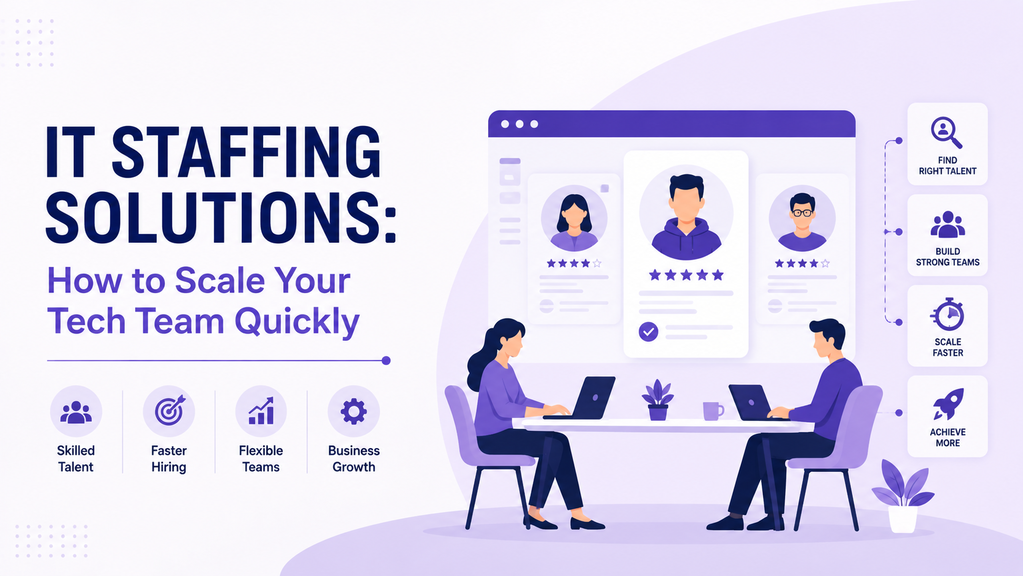
Technology projects rarely wait for a company’s hiring process to catch up. A new project gets approved, a deadline gets set, and suddenly a team needs specialised skills or simply more hands than it currently has. Traditional hiring, sourcing, interviewing, negotiating, onboarding, can take months, a timeline that often doesn’t match how quickly business needs actually move.
This is where IT Staffing Solutions offer a practical alternative, giving companies a way to scale their technical capacity quickly without going through a full recruitment cycle each time.
Why Traditional Hiring Struggles to Keep Pace
Permanent hiring makes sense for long-term, ongoing roles. But it becomes a genuine bottleneck when:
- A project needs specialised skills the internal team doesn’t have
- Work needs to start faster than a full recruitment cycle allows
- Demand for technical work fluctuates rather than staying constant
- A company wants to test a new capability before committing to permanent headcount
In these situations, waiting months to fill a role isn’t just inconvenient, it can mean missed deadlines, delayed launches, or lost opportunities altogether.
What Does Scaling a Tech Team Through Staffing Solutions Actually Look Like?
At a practical level, this approach means bringing in talented, technical resources to fulfil both short-term and long-term IT staffing needs, working as an extension of a company’s existing team rather than a separate, disconnected unit. This works particularly well for companies looking to scale up project requirements quickly, or those wanting to strengthen their core team with experienced IT professionals without a lengthy hiring process.
A client-centric team structure helps speed up development and keeps projects moving toward their deadlines, with the broader objective of helping a company function seamlessly even as its technical needs shift.
Practical Advantages of This Approach
Scaling a tech team this way tends to deliver a specific set of practical benefits:
- Faster access to talent, avoiding the lengthy timelines of traditional recruitment.
- Lower development costs, compared to the overhead of permanent hiring for short-term needs.
- Fewer legal and administrative complications, since staffing arrangements typically involve less contractual complexity than direct employment.
- Ability to overcome geographical limitations, accessing skilled professionals regardless of location.
- Greater flexibility, scaling a team up or down as project needs evolve
Together, these advantages give companies a genuine edge in moving projects forward without the friction that traditional hiring can introduce.
Why Domain Expertise Matters, Especially in BFSI
Not all technical staffing needs are the same. Companies operating in specialised sectors, banking, insurance, asset management, benefit significantly from staffing resources who already understand the domain, rather than needing to be trained from scratch.
Experience working with banks, asset management companies, NBFCs, insurance companies, and broking firms brings a different kind of value than generic technical staffing. Resources with hands-on skills across large-sized databases, Microsoft technologies, life and general insurance, pension schemes, Mutual Fund Software, Wealth Management Software, demat operations, and analytics reporting can integrate into a project far more quickly, since they already understand the operational context they’re working within.
How Does the Engagement Model Actually Work?
A common question companies have is how billing and project structure work under this kind of arrangement. A Time & Material contract model is typically used, where teams work closely with the client to build an efficient project plan delivered across smaller timelines. This promotes flexibility, spreads the workload appropriately, and helps balance resources across the project.
Under this model, the client is billed for actual time spent on development, and plays a more active role in shaping the project’s direction compared to a fixed-price arrangement. This structure suits situations where requirements may evolve, since it allows the project plan to adapt without renegotiating a fixed scope each time.
Situations Where This Approach Tends to Fit Best
A few recurring scenarios tend to show up across companies that scale their tech teams this way. A project often has a defined scope but a tight timeline, leaving little room for a months-long hiring process. Sometimes the need is for a specific technical or domain skill that’s only required for the duration of one project, not a permanent addition to the team. Other times, a company is testing a new technology direction and isn’t ready to commit to full-time hires until the initiative proves itself. And fairly often, it’s simply a matter of an existing team being stretched thin, needing extra hands without adding long-term headcount.
Conclusion
Scaling a technical team quickly is often less about finding more people and more about finding the right people, with the right skills, on a timeline that actually matches business needs. IT staffing solutions offer companies a practical way to close this gap, combining faster access to talent, domain-specific expertise, and flexible engagement models that adapt as project requirements evolve. For companies facing tight deadlines or specialised skill gaps, this approach offers a considerably faster path forward than traditional hiring alone.
FAQs
1. What’s the difference between IT staffing solutions and traditional hiring?
Traditional hiring involves a full recruitment cycle for permanent roles, while staffing solutions provide access to skilled technical resources faster, for both short-term and long-term needs, without the same hiring overhead.
2. How does billing typically work under this model?
Most engagements use a Time & Material contract, where companies are billed for actual time spent on development, offering more flexibility than a fixed-price project structure.
3. Is this approach only useful for short-term projects?
No, it works for both short-term and long-term staffing needs, depending on whether a company needs temporary support or wants to strengthen its core team over a longer period.
4. Why does domain expertise matter when scaling a tech team this way?
Resources with prior experience in sectors like banking, insurance, or wealth management can integrate into a project faster, since they already understand the operational context rather than needing extensive onboarding.
5. Can a company scale the team back down once a project ends?
Yes, one of the core advantages of this approach is flexibility, teams can be scaled up during high-demand periods and scaled back down once the workload normalises.